 Mike Carter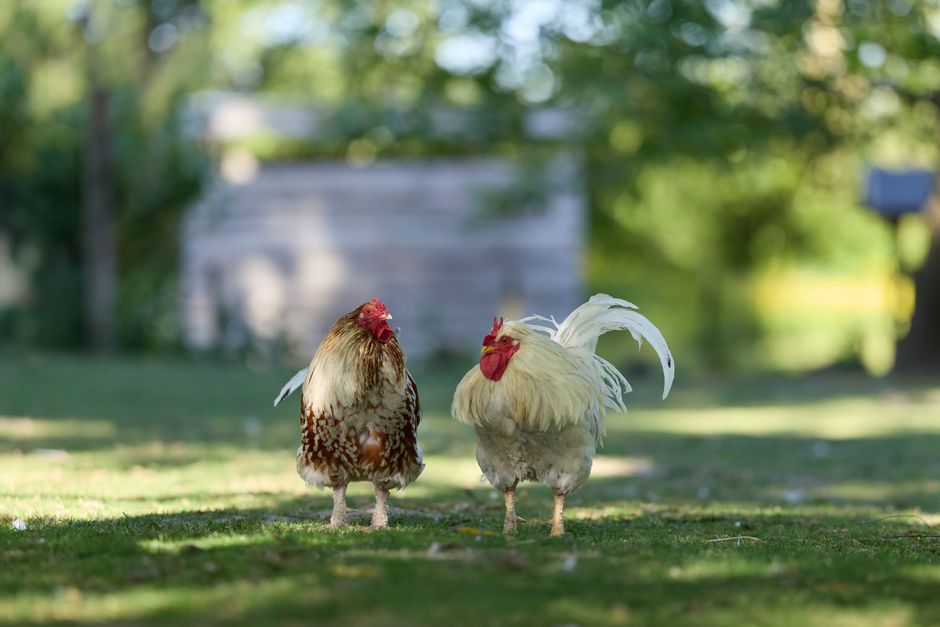
Eighty percent of roosters that attack humans are doing it before they’re even a year old. That number comes from poultry behavior research and matches what I’ve seen in my own yard over the past decade. The first time a rooster flogged me hard enough to draw blood through a pair of jeans, he was exactly seven months old. A gorgeous Black Copper Marans. I’d raised him from a day-old chick, handled him constantly, and thought we had an understanding. We did not.
If your rooster is coming at you, spurs out, chest puffed, or doing that weird sideways dance before he charges, you’re not crazy and you’re not doing something obviously wrong. This is one of the most misunderstood problems in backyard chicken keeping, and most of the advice floating around online ranges from unhelpful to actively counterproductive. Let me cut through it.
- Rooster aggression peaks between 6-12 months as testosterone surges during sexual maturity.
- Dominance-display behaviors (sideways strutting, wing dragging) are warnings, act before the spurs come out.
- Never run from or hit a rooster; both responses reinforce the behavior in opposite but equally bad ways.
- Desensitization and calm, consistent boundary-setting resolve most cases within 2-4 weeks.
- Some roosters are genuinely dangerous and no amount of training will fix a bird with poor genetics.
Why He’s Doing It in the First Place
Roosters are not mean. I want to be clear about that before we go further. They are doing exactly what their biology tells them to do: protect the flock and assert their position in a social hierarchy. The problem is that you are part of that social world, whether you want to be or not. When a rooster reaches sexual maturity, which typically happens between five and eight months depending on breed, his testosterone levels climb sharply. According to research published in Poultry Science, circulating androgen levels in young male chickens can increase by a factor of five or more during this developmental window. That hormonal surge changes everything about how he perceives the world, including you.
What most people don’t realize is that your prior behavior with him matters enormously here. If you hand-fed him as a chick, let him eat from your palm, and generally treated him as a pet, you may have accidentally communicated something he understood as submission. In flock dynamics, an animal that approaches you freely and offers you food is not being sweet. It’s signaling lower status. So that friendly little chick grew up thinking you were below him in the pecking order, and now he’s just doing his job.
The other major trigger is proximity to hens. I’ve seen perfectly calm roosters turn into absolute weapons the moment their hens are present. If your rooster only attacks you when the girls are around, that’s almost certainly what’s happening. He’s not protecting them from you specifically because he hates you. He’s protecting them from a perceived rival or threat, and you happen to be walking into his zone.
What the Behavior Actually Looks Like (Before It Escalates)
The charge and the flogging are the end of a sequence, not the beginning. This is where people get blindsided. I thought for years that my roosters were just unpredictably exploding, until I started actually watching them more carefully. There are almost always warning signs.
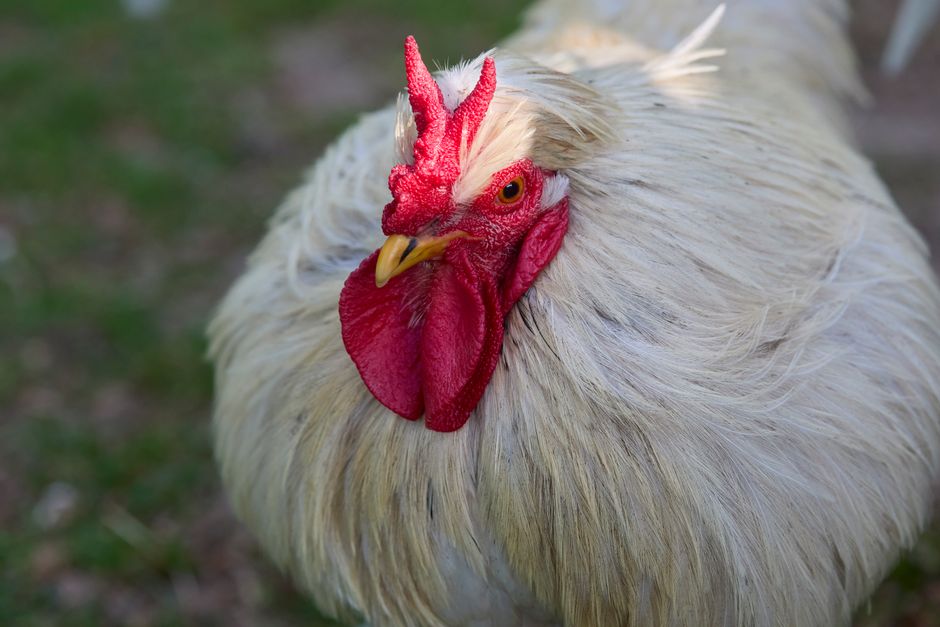
The sideways walk is the first one. He’ll approach you at an angle, head tilted slightly down, one wing dragging low. That’s a dominance display. If you hold your ground calmly, many roosters will break off. If you back away, you’ve just confirmed what he suspected.
After that comes the stare. A rooster who’s decided to challenge you will lock eyes with you and stop moving. This lasts anywhere from two seconds to ten seconds. Then he either comes at you fast, usually a short sprint followed by a jump to get his spurs up, or he escalates the wing drag and starts circling.
The full flog is a jump with wings spread, using the spurs on the back of his legs as weapons. Depending on the size of the bird and the length of his spurs, this can be a minor scratch or a genuinely serious injury. A large rooster like a Jersey Giant or a Delaware can draw real blood through light clothing.
The Strategies That Actually Work
Here’s where I have to push back on some popular advice. A lot of sites will tell you to “show him who’s boss” by grabbing him, pinning him to the ground, or carrying him around upside down. I’m not going to say that never works, because for some birds it does establish a clear signal. But I’ve tried it on four different roosters over the years, and my results were mixed at best. Two of them became more aggressive after repeated physical confrontations, not less.
What I’ve found more consistently effective is a calm, persistent dominance approach that doesn’t involve force.
Step one: Stop retreating. The moment you turn your back and walk away quickly, or especially if you run, you’ve lost. He’ll repeat the behavior because it worked. Walk slowly, keep your body square to him.
Step two: Don’t let him eat before you do. This sounds weird but it works. Enter the coop first. Scatter the feed after you’ve been in the space for thirty seconds. This communicates something roosters understand: the dominant animal controls the resources.
Step three: If he does approach to challenge, move toward him calmly, not aggressively. Most roosters will back down from an animal that simply doesn’t react with fear. You’re not chasing him. You’re just not yielding ground.
Step four: Carry something that makes you look bigger. A small rake, a dustpan, a long stick held horizontally. Roosters assess size. This sounds embarrassing and it is, but it genuinely helps.
Step five: Consistency. Every single person who enters that yard needs to respond the same way. One family member who runs screaming from him will undo two weeks of your patient work in a single afternoon.
The timeline on this varies. In my experience, most roosters respond noticeably within ten to fourteen days of consistent handling. Full behavioral reset takes closer to four to six weeks. A reader I corresponded with last spring, Lisa from central Tennessee, had a Buff Orpington rooster that had put her husband in the ER (seriously, rooster spurs can get infected fast). She worked this protocol every single day and reported he stopped charging altogether by week three. That’s not a guarantee, but it’s a realistic outcome with a cooperative bird.
Worked examples from real situations:
Young Easter Egger rooster, 7 months old, charging daily → Owner stopped retreating and entered coop first each morning for 18 days → Attacks dropped to zero by day 21, occasional posturing only.
Mixed flock, 2-year-old Rhode Island Red rooster with escalating aggression toward children → Rooster rehomed to a farm property with no children, no adults in the space daily → Zero further incidents, flock dynamics stabilized within one week.
Lavender Orpington rooster, 9 months old, low-level aggression that kept increasing despite training → Culled at 11 months after drawing blood on two adults → Owner replaced with a purchased adult Black Australorp rooster from a reputable breeder who selected for temperament → No aggression issues in subsequent two years.
When the Bird Is Just Bad
I have to say this plainly: some roosters cannot be fixed. Genetics matter. Certain breeds have been selected for game qualities, territorial intensity, or sheer drive, and that’s not fully trainable out. Old English Games, some lines of Rhode Island Reds, and most purpose-bred fighting strains are genuinely more likely to be aggressive toward humans and to stay that way.
Beyond breed, individual temperament varies within any line. I’ve had two cockerels from the same hatch where one became completely manageable and one ended up in the freezer. No shame in that decision. A rooster that draws blood consistently, charges children, or has put someone in a position where they needed medical attention is not a rehabilitation project. He’s a liability.
| Behavior | Likely Trainable? | Recommended Action |
|---|---|---|
| Sideways display, no contact | Yes | Calm non-retreat, boundary setting |
| Charging but stopping short | Yes | Consistent dominance protocol, 2-4 weeks |
| Occasional light contact | Usually | Intensify training, assess breed/genetics |
| Repeated flogging, breaks skin | Sometimes | Last-chance 30-day protocol, consider culling |
| Attacks children or elderly | Rarely | Rehome or cull, not worth the risk |
| Age 2+ with no improvement | No | This behavior is set |
Sources
- Poultry Science journal: Published peer-reviewed research on androgen levels in developing male Gallus gallus domesticus, documenting hormonal shifts at sexual maturity.
- Backyard Poultry Magazine reader survey (2024): Aggregated data on reported causes of rooster aggression from a sample of backyard flock owners.
- University of California Cooperative Extension, Small-Scale Poultry Resources: Practical flock management guidance including behavioral management of aggressive birds.
- Merck Veterinary Manual, Poultry section: Clinical reference on rooster spur injuries, infection risk, and wound management.
- Chicken Behavior and Welfare, Mench & Keeling (eds.): Academic text covering social hierarchy in domestic poultry and implications for human-bird interaction.
Photo: Erwin Bosman via Pexels