 Dr. Tom Henderson
You’ve been feeding, watering, and caring for your pullets for months. You check the nesting boxes every morning with that mix of hope and mild disappointment. Then one Tuesday, there it is: a small, slightly odd-shaped egg sitting in the corner of the coop. The wait is finally over. If you’re still in the waiting phase, understanding exactly what drives that first egg can make the whole experience a lot less frustrating.
The Average Age When Chickens Start Laying
| Breed Type | Typical Laying Start Age | First Egg Size | Notes |
|---|---|---|---|
| Production (Leghorn, Golden Comet) | 16-17 weeks | Small | Early and consistent |
| Standard Dual-Purpose | 18-24 weeks | Small to medium | Most backyard breeds |
| Large/Heritage (Brahma, Jersey Giant) | 28-32 weeks | Small | Slow-maturing birds |
| New Layer (Any breed) | - | 30-35 grams | Normalizes to 55-60g within 4-6 weeks |
Most backyard chickens lay their first egg somewhere between 18 and 24 weeks of age. That’s the honest range, not the optimistic one you’ll sometimes see on feed store signage. A few breeds can surprise you as early as 16 weeks, while others, particularly large or heritage breeds, won’t lay until they’re closer to 28 or even 32 weeks old.
Breed is the single biggest variable. Production-focused breeds like the Leghorn or Golden Comet are built specifically to lay early and lay often. A Leghorn pullet hitting 16 to 17 weeks and dropping her first egg is completely normal. A Brahma or Jersey Giant, though? Those are large dual-purpose birds that mature slowly. You might see some hens in your flock laying reliably for six weeks before their flockmates even start. If you’re still choosing your birds, our guide to the best egg laying chickens breaks down which breeds consistently perform and when you can realistically expect production to start.
Season also plays a major role. Laying is triggered by light. Pullets need roughly 14 to 16 hours of daylight to kick-start their reproductive cycle. A chick hatched in early spring will often reach laying age right as daylight hours are long and strong, making for a smooth transition. A pullet that hits 18 weeks in late October might stall until spring, even if she’s biologically ready, because there simply isn’t enough light to trigger ovulation.
Signs Your Pullet Is Getting Close
The weeks right before that first egg arrive with some clear signals if you know what to look for.
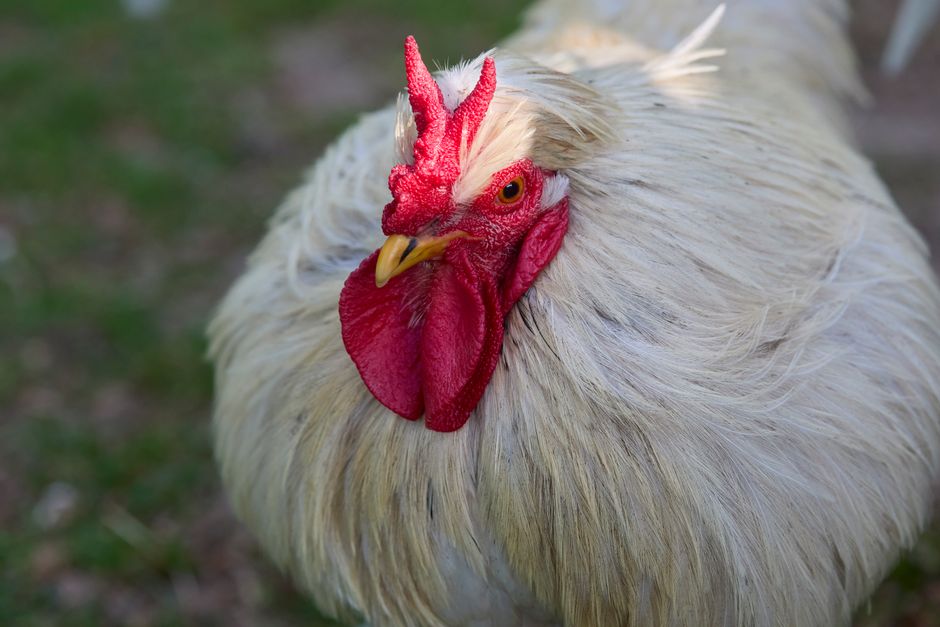
Watch the comb and wattles closely. As a pullet approaches laying age, estrogen production ramps up and the comb grows noticeably larger and turns a deeper, more vivid red. A pale, small comb on a 20-week-old pullet is a sign she’s not there yet. A bright red, full comb means eggs are coming within a week or two.
She’ll start squatting. This is one of the most definitive pre-laying behaviors. When you reach down toward a pullet and she drops low to the ground, spreads her wings slightly, and holds still, that’s a submissive mating posture. It means she’s sexually mature. Some people call it the “squat.” Once you see consistent squatting, expect eggs within 7 to 10 days.
She’ll also get nosy about the nesting boxes. Young pullets ignore them completely. Pre-laying hens will hop in, scratch around, and hop back out. They’re scouting. You might see a hen sitting in an empty nesting box for 20 minutes and walking away with nothing to show for it. That’s completely normal and it means she’s practicing.
Check the pelvis bones too. You can gently press your fingers between the two pointed pelvic bones on either side of the vent. In a non-laying hen, these bones are close together, often less than one finger-width apart. In a hen ready to lay or actively laying, there’s enough space for two or three finger-widths. It sounds odd, but once you’ve felt the difference it becomes a reliable check.
What Those First Eggs Actually Look Like
8 Beginner Chicken Care Mistakes To Avoid | Backyard Chickens 101 | Egg Laying Hens and Chicks · Oak Abode on YouTube
Don’t expect perfection from a brand-new layer. First eggs are often small, sometimes dramatically so. A standard laying hen might eventually produce a 55- to 60-gram egg, but her first attempts might clock in at 30 to 35 grams, closer to a peewee or small grade.
Shell quality can be inconsistent early on. You might get a soft-shelled egg, a shell-less egg that’s essentially just a membrane, or an egg with an unusual surface texture. Double yolkers are also common in new layers because the hormonal system is still calibrating. The ovulation cycle occasionally releases two yolks too close together and they end up packaged into one shell.
Give a new layer about 4 to 6 weeks to normalize. Most pullets are producing consistent, properly sized eggs with good shell quality by then. If problems like soft shells persist beyond that window, it’s usually a calcium deficiency. Make sure you’re offering oyster shell free-choice as a calcium supplement separate from layer feed. Don’t rely on feed alone to meet calcium needs during peak laying.
Factors That Delay or Disrupt the First Egg
Sometimes 24 weeks comes and goes and there’s still no egg. Before you panic, run through this checklist of common causes.
Insufficient light. Below 14 hours of daily light, many hens simply won’t lay. If your pullets are maturing in fall or winter, supplemental lighting is the solution. A simple 40-watt incandescent or LED bulb on a timer set to provide morning light can make the difference. Add light in the morning rather than the evening so you don’t abruptly cut off the light cycle at night.
Stress. Moving to a new coop, introducing new flock members, a predator scare, extreme heat, or even a change in feed can delay onset of laying. Stress suppresses the reproductive hormones. If you’ve recently done something that disrupted the flock, give the birds a week or two to settle before expecting eggs.
Nutritional gaps. Pullets raised on grower feed that was switched to layer feed too late, or birds that have been eating mostly scraps, may not have the nutritional foundation to support egg production. Make sure hens transitioning to laying are on a complete layer feed with at least 16% protein and adequate calcium. Our article on chicken feed types explained covers the differences between starter, grower, and layer rations so you can make sure you’re feeding the right thing at the right stage.
Hidden nesting spots. This one catches people off guard. A hen may be laying perfectly on schedule, just not where you’re looking. If you free-range your birds, do a thorough search of the yard, especially under bushes, in low shrubs, behind equipment, and in any sheltered corner. I’ve found clutches of 14 eggs tucked behind a water trough more than once.
Illness or parasites. A heavy lice or mite infestation, an active respiratory infection, or internal laying issues can all delay or stop production. If a hen looks unwell, pale, lethargic, or is losing feathers beyond normal molt, a health issue may be the culprit.
How to Encourage Your Hens to Lay in the Right Place
Getting hens to use the nesting boxes rather than random corners of the coop or your garden takes a little setup.
Step 1: Get the nesting boxes right. The standard recommendation is one box for every 3 to 4 hens. Boxes should be about 12 inches square for average-sized breeds, positioned lower than the roosting bars so hens aren’t tempted to sleep in them, and located in a quieter, dimmer part of the coop. Hens want privacy when they lay.
Step 2: Use attractive bedding. Soft, clean nesting material encourages hens to settle in. Pine shavings, straw, or nesting pads all work well. For a comparison of materials, see our overview of chicken coop bedding options. Nesting box pads like the Precision Pet Excelsior Nesting Pads are popular because they’re easy to replace and resist mites.
Step 3: Use a fake egg or golf ball. Place a ceramic egg, a plastic Easter egg, or a golf ball in each nesting box before your pullets start laying. It signals to them that this is an approved laying spot. This single trick prevents a huge percentage of “where are the eggs?” situations. Remove it after the flock is reliably using the boxes.
Step 4: Confine them in the morning. Hens typically lay in the first few hours after sunrise. If your hens are free-ranging and laying who-knows-where, keep them in the coop until noon for a week or two. This forces them to use the nesting boxes and tends to establish a lasting habit.
Step 5: Collect eggs regularly. Leaving eggs in the nest for days can encourage broodiness and lets hens develop habits of laying in piles rather than distributing across boxes. Collecting once or twice daily keeps things tidy and discourages broodiness in breeds prone to it.
Breed-by-Breed Comparison: Expected Laying Age
Sources
| Breed | Expected First Egg | Annual Egg Production |
|---|---|---|
| Leghorn | 16 to 18 weeks | 280 to 320 eggs |
| Golden Comet / Red Sex-Link | 16 to 18 weeks | 250 to 300 eggs |
| Rhode Island Red | 18 to 20 weeks | 200 to 260 eggs |
| Plymouth Rock | 18 to 20 weeks | 200 to 250 eggs |
| Easter Egger | 20 to 24 weeks | 200 to 280 eggs |
| Australorp | 20 to 22 weeks | 250 to 300 eggs |
| Wyandotte | 20 to 24 weeks | 180 to 220 eggs |
| Orpington | 22 to 26 weeks | 150 to 180 eggs |
| Brahma | 28 to 32 weeks | 130 to 150 eggs |
| Jersey Giant | 28 to 32 weeks | 150 to 180 eggs |
If you’re choosing breeds specifically for egg production and want something that lays reliably without a long wait, you’ll want to look at friendly chicken breeds alongside production stats, since temperament matters in a backyard setting. Easter Eggers are a particularly popular choice for beginners who want colorful eggs and a docile bird. You can read more about them in our dedicated Easter Egger chickens profile.
The wait for that first egg is genuinely one of the more exciting parts of keeping chickens, even if the timeline feels endless when you’re in the middle of it. Understanding what’s happening biologically, knowing what signals to watch for, and setting up your coop properly will put you ahead of most first-time keepers. Get the light right, get the nesting boxes right, and give your birds quality feed. The eggs will come.
Photo: Erwin Bosman via Pexels