 Janet Wilson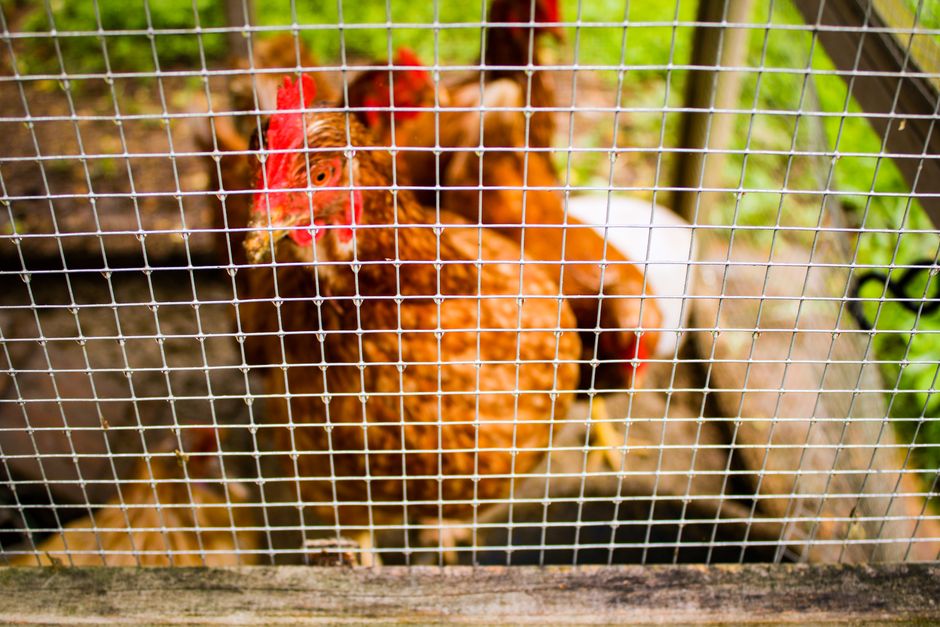
The Vice President of the United States now keeps chickens. That’s not a joke or a political metaphor. In June 2026, JD Vance had a custom Victorian-style coop installed on the grounds of the Naval Observatory in Washington, D.C., built by Carolina Coops, a North Carolina small business that’s been doing this work since 2008. The coop was designed to match the Queen Anne architecture of Number One Observatory Circle. The Vance kids have already named the hens. And according to CNN, the whole thing cost taxpayers nothing.
That last detail matters, because the story has legs for reasons beyond the novelty of chickens at an official government residence. The Washington Post was still digging into unanswered questions about who actually manages the flock as recently as July 7, 2026. Fox News tied the installation directly to the Make America Healthy Again movement. Google Trends shows “how to build a chicken coop” searches surging again in 2026, even though egg prices have dropped from a 20-year high of $6.23/dozen in March 2025 down to $2.19/dozen by May 2026. People aren’t buying into backyard chickens to save money on eggs anymore. They’re buying into something else entirely.
So let’s talk about what that something else actually requires, and where the Vice President’s setup gets it right, and where real-world keepers tend to get burned.
The Coop Is Actually the Easy Part
Carolina Coops builds beautiful structures. Seriously, go look at their portfolio. But a gorgeous coop is the beginning of your problems, not the solution to them. The Washington Post’s July 7 deep-dive raised a pointed question that every new keeper faces sooner or later: who, specifically, is doing the daily work?
Chickens need attention every single day. Not twice a week. Not when it’s convenient. Water twice daily in summer heat, feed managed so you’re not breeding rats, eggs collected before they get broody or broken, and a pop door that has to close before dark or something will kill your birds. If Vance is genuinely doing this himself, good. If it’s actually Naval Observatory grounds staff, that’s a different story, and the Post is right to ask.
The lesson isn’t political. It’s logistical. Before you build anything, decide who owns the 6 a.m. and the 9 p.m. If the answer is “whoever’s around,” your flock will suffer for it.
Breed and Scale Actually Matter
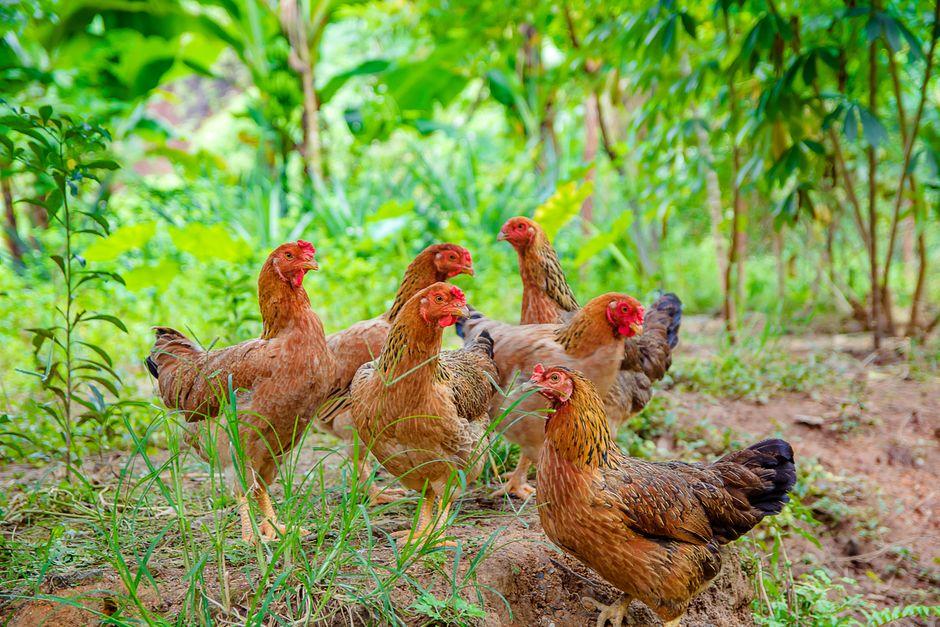
Twelve hens on 72 acres is a very different situation than twelve hens in a suburban quarter-acre backyard. Vance has the space to let birds range freely, which reduces feed costs and behavioral problems simultaneously. Most of the 11 million U.S. households now keeping backyard chickens, per the American Pet Products Association’s 2025 survey, do not have that luxury.
For suburban keepers with limited run space, breed selection is where you control the most variables.
| Breed | Avg. Eggs/Year | Temperament | Heat Tolerance | Noise Level |
|---|---|---|---|---|
| Rhode Island Red | 250-300 | Assertive | Good | Moderate |
| Black Australorp | 250-300 | Calm | Good | Low |
| Buff Orpington | 180-220 | Docile | Fair | Low |
| Barred Plymouth Rock | 250-280 | Friendly | Good | Low |
| Easter Egger | 200-250 | Curious | Fair | Low |
For a backyard flock where neighbors are close and kids are involved, Black Australorps and Barred Rocks are the practical top two. Australorps hold the world record for egg production and they’re quiet enough that your neighbors won’t know you have them. Rhode Island Reds produce just as well but they can be mean to younger birds and children, which gets old fast.
The MAHA Connection Is Real, but Read the Fine Print
10 Chicken Coop Mistakes you DON'T want to Make ! · Carolina Coops® on YouTube
Fox News framed the Vance coop as a MAHA statement, and it’s not wrong. The Make America Healthy Again movement has been one of the clearest drivers of backyard flock growth alongside farm-to-table and food sovereignty trends. People want to know where their food comes from. That’s legitimate.
Here’s what the lifestyle content doesn’t tell you. A Yahoo Life piece published July 1, 2026 got it right: raising backyard chickens will almost certainly not save you money, and that’s not stopping anyone. The math rarely works out. Factor in the coop build, quality feed at current prices (around $25-35 for a 50-pound bag of layer pellets), bedding, occasional vet costs, and you’re spending more per dozen than you’d pay at a grocery store for most of the year. Right now, with eggs at $2.19/dozen, you’d need a perfect operation to break even.
But that’s genuinely not why most people are doing this in 2026. They’re doing it for control over their food source, for the experience of knowing their birds’ names, for what it teaches their kids. Those are real returns. Just don’t let someone sell you on the economics, because the economics will disappoint you.
Predator-Proofing: Where Most First-Time Setups Fail
Carolina Coops builds hardware cloth into their structures rather than chicken wire, and that distinction alone is the difference between a secure coop and a raccoon buffet. Chicken wire keeps chickens in. Hardware cloth keeps predators out. If you’re building or buying a coop and the spec sheet says “chicken wire,” walk away.
The other failures I see constantly:
Flooring. Dig-in predators, mostly foxes and raccoons, will go under a coop that sits directly on soil. Either use a hardware cloth apron buried at least 12 inches out from the perimeter, or put the coop on a solid floor.
The pop door. If you’re not home by dusk, you need an automatic pop door controller. A $60-90 timer-based unit will pay for itself the first time it saves a bird. Predators know your schedule better than you do.
Ventilation gaps. Any opening larger than half an inch needs hardware cloth over it. Weasels and minks can get through spaces that look impossibly small, and they will kill every bird in the coop in one night.
What “Personally Caring for the Birds” Actually Looks Like
Vance’s office says he’ll personally care for the flock. I have no reason to doubt that, and I hope it’s true, because it would make him a more credible voice on food sovereignty than most politicians who talk about it. But “personally caring for birds” has a specific content that’s worth naming.
It means being outside in January at 7 a.m. checking waterers that have frozen overnight. It means figuring out which hen has a prolapsed vent and making a call about treatment versus culling. It means dealing with a broody hen who hasn’t left the nest box in three weeks and is losing weight. It means the smell of the coop on a hot July afternoon when the bedding needs turning. None of that is hard. All of it is real.
The broader surge in backyard flock interest in 2026 is driven by genuinely good impulses: wanting real food, wanting connection to where it comes from, wanting something tactile and meaningful in a world that often feels abstract. A well-built coop and a dozen well-chosen hens will deliver all of that. They’ll also deliver a set of small, unglamorous daily responsibilities that don’t take a lot of time but take time every single day without exception. Know that going in, and you’ll be fine.
Sources
- Vance family installs Victorian-style chicken coop at vice presidential residence (June 9, 2026)
- JD Vance installs custom chicken coop at Naval Observatory (June 9, 2026)
- The Vances added a chicken coop to the vice president’s residence. We had questions. (July 7, 2026)
- Raising backyard chickens won’t guarantee you a profit. Here’s why that’s not stopping anyone in 2026 (July 1, 2026)
- JD Vance’s New Chicken Coop Isn’t Just a Folksy Prop (June 15, 2026)
Photo: Misty Elchert via Pexels