 Sarah Mills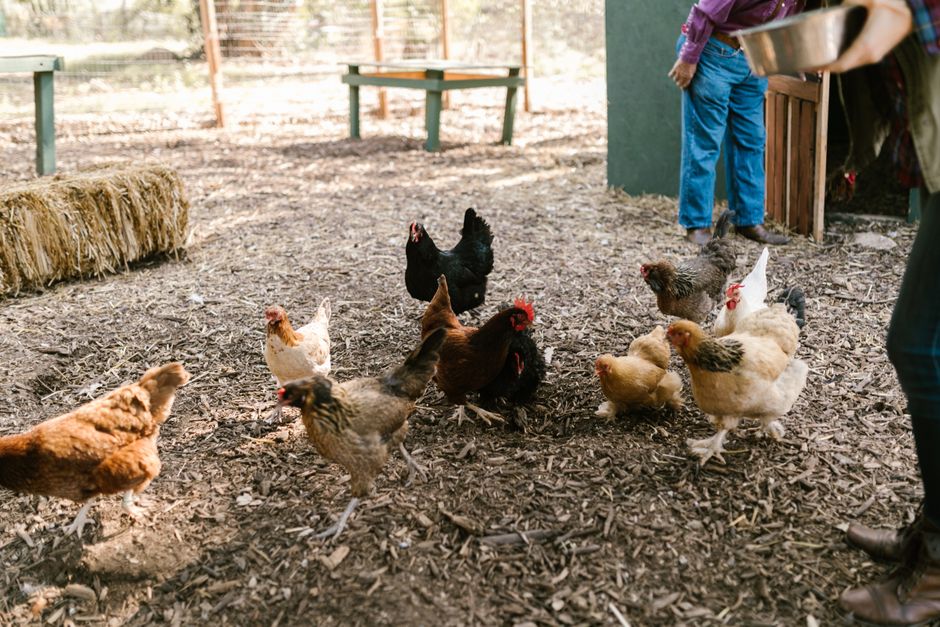
You probably saw the headline last week and thought, “Wait, the Vice President is keeping chickens?” Yes. On June 9, 2026, JD Vance had a custom Victorian-style chicken coop installed at the Naval Observatory, complete with 12 baby chicks he says he’ll care for personally. The coop was built by Carolina Coops, a family-owned business out of Creedmoor, North Carolina, that’s been doing this since 2008, and it was designed to match the Queen Anne Victorian architecture of Number One Observatory Circle. Nobody paid for it with tax dollars. Carolina Coops donated it. The whole thing is, frankly, kind of delightful.
But here’s what I’m watching: every time something like this goes mainstream, a wave of people decide to start a flock, and a big chunk of them make the same expensive, heartbreaking mistakes that were completely avoidable. The American Pet Products Association now counts roughly 11 million U.S. households keeping backyard chickens. That number keeps climbing. If the Vance story pushed you over the edge into finally doing this, I want you to go in with your eyes open.
Your City Might Not Let You Do This Yet
Before you fall in love with a breed or start pricing coops, check your local ordinances. I’ve watched people spend $800 on a coop and then discover their HOA or municipality bans hens entirely. It happens constantly.
The timing here is actually interesting. As of June 2026, at least three cities, Edgewater, Florida; Westminster, Colorado; and Paxton, Illinois, are actively debating or voting on new backyard chicken rules. Westminster is considering expanding the number of hens residents can keep, with food affordability cited as the main driver behind the push. Cities are moving in the right direction, but they’re moving slowly, and “in progress” doesn’t mean you’re legal today.
Most municipalities that do allow chickens restrict you to hens only (roosters are a noise problem), cap the flock at four to six birds, require setbacks from property lines, and prohibit slaughter on residential lots. Some require a permit. A few require neighbor sign-off. Find your actual city code, not a blog post summarizing it, before you spend a dollar.
A Good Coop Costs More Than You Think
| Item | Budget Build (DIY) | Pre-Built Coop | Space Requirement |
|---|---|---|---|
| Cost | $200-$400 | $400-$800 | 4 sq ft interior per hen |
| Material | Varies (user-owned tools) | Pre-fabricated | 10 sq ft run per hen |
| Example (6 hens) | Lower cost if tools available | Ready to use | 24 sq ft inside, 60 sq ft run minimum |
| Durability | Variable | Often fails in 2 years (budget models) | - |
Carolina Coops builds beautiful structures. Their Victorian build for Vance is the kind of thing that ends up on Instagram. But most people don’t need that, and what most people don’t realize is that even a basic, functional coop that properly protects six hens is going to run you $400 to $800 if you buy pre-built, or $200 to $400 in materials if you build it yourself and already own tools.
The cheap flat-pack coops on Amazon and Tractor Supply rated for “8 chickens” are almost universally undersized and built from thin plywood that warps in rain and splits in cold. I’ve seen them fall apart in under two years. The rule I use: budget four square feet of interior space per hen, and ten square feet of run space per hen, minimum. A flock of six needs at least 24 square feet inside and 60 outside. Most budget coops don’t come close.
Predator protection is where new keepers get gutted, emotionally and financially. Hardware cloth, the welded wire with half-inch openings, costs more than chicken wire but it’s the only thing that actually keeps out raccoons, weasels, and rats. Chicken wire keeps chickens in. It does not keep predators out. Bury your run fencing six inches or lay it flat on the ground extending outward 12 inches to stop diggers. Put a latch on every door that requires two steps to open, because raccoons can figure out simple latches. I’m not being dramatic. This is just what it takes.
Avian Flu Is Real and New Keepers Are Not Ready for It
10 Chicken Coop Mistakes you DON'T want to Make ! · Carolina Coops® on YouTube
This part is uncomfortable but I’d rather tell you now. A May 2026 CDC survey of 638 backyard flock owners found that while 94% had heard of avian influenza, one in three didn’t know the signs or symptoms. That’s a significant knowledge gap, and it matters right now because HPAI, highly pathogenic avian influenza, was confirmed in backyard flocks in Iowa, Wisconsin, Georgia, and other states in early 2026. Spring wild bird migration is the primary way it spreads to backyard birds.
Symptoms to know: sudden death with no warning, respiratory distress, dramatic drop in egg production, swollen or discolored combs and wattles, and neurological signs like loss of coordination. If you see multiple birds sick or dead at the same time, call your state veterinarian, don’t wait.
Biosecurity for a backyard flock doesn’t have to be complicated, but it has to be consistent. Keep wild birds out of your feed and water. Don’t borrow equipment from other flock owners. Change your shoes or use boot covers before entering your coop if you’ve been around other poultry. If you visit a farm or a feed store that sells live birds, change clothes before going back to your flock. These habits feel like overkill until they’re not.
Start With the Right Breeds
Twelve baby chicks is a lot for a first flock, and I’d gently suggest Vance is going to have a learning curve. For most suburban keepers, four to six hens is the sweet spot. Enough eggs to matter, small enough to actually manage well.
For beginners, I steer people toward breeds that are calm, cold-hardy, and reliable layers: Black Australorps, Rhode Island Reds, and Buff Orpingtons are all solid choices. Australorps hold the world record for egg laying and are genuinely docile. Orpingtons are so friendly they’ll follow you around the yard. If you’re in a hot climate like Florida or Georgia, look at Leghorns or Easter Eggers instead, they handle heat better than the heavier dual-purpose breeds.
Avoid Silkies and Polish chickens if you want consistent egg production. They’re beautiful. They’re also fragile, lower-laying, and harder to keep healthy. Start practical, add interesting breeds later once you know what you’re doing.
Feed Is Simple But Feed Quality Matters
Layer pellets with 16% protein are your baseline from the time hens start laying, usually around 18 to 20 weeks depending on breed. Before that, chicks need chick starter with 18 to 20% protein. Scratch grains are a treat, not a diet. Oyster shell on the side for calcium. Fresh water every day, more in summer.
What I see new keepers mess up: switching feed brands constantly because of price, and then wondering why production drops. Hens take a week or two to adjust to feed changes. Pick a quality layer feed, Purina Layena, Nutrena NatureWise, or a good regional brand, and stick with it.
The price of feed has not gotten friendlier. Expect to spend $20 to $30 per 50-pound bag depending on where you live. Six hens eat roughly 1.5 pounds of feed per day combined. Do that math before you assume chickens are going to dramatically offset your grocery bill. They might, eventually, but year one almost never pencils out financially.
The Vance coop story is fun, and honestly, any news cycle that gets more people thinking about food independence and self-sufficiency is a net positive in my book. Just go in prepared. Check your ordinances, build or buy a real coop, learn the avian flu basics, and start with four to six calm breeds. A well-managed backyard flock is one of the most rewarding things you can add to your property. A poorly planned one is an expensive, heartbreaking mess. You’ve got everything you need to be the former.
Sources
- Vance family installs Victorian-style chicken coop at vice presidential residence (June 9, 2026)
- Vance adds chicken coop to vice president’s residence, along with a dozen baby chicks (June 9, 2026)
- JD Vance installs custom chicken coop at Naval Observatory (June 9, 2026)
- JD Vance Got a Chicken Coop. Should You? (June 19, 2026)
- Westminster rule could allow more backyard chickens (June 9, 2026)
- Survey: A third of US backyard flock owners don’t know signs, symptoms of avian flu (May 16, 2026)
Photo: RDNE Stock project via Pexels