 Mike Carter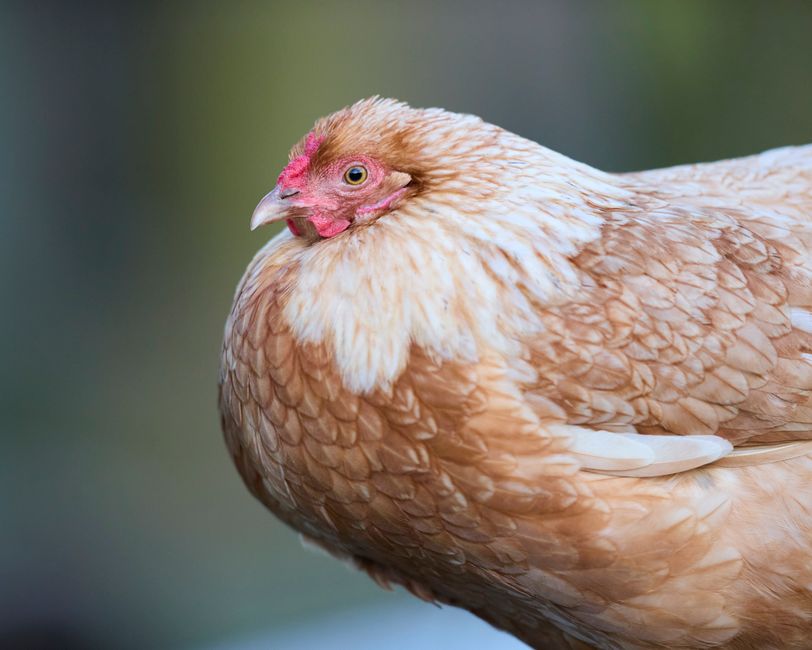
The first time I held a Buff Orpington pullet, I thought someone had handed me a loaf of warm bread. She was round, dense, impossibly soft, and completely unfazed by being picked up by a stranger. That calm temperament isn’t an accident. It’s been bred into this bird for over a century, and it’s exactly why Orpingtons remain one of the most popular backyard breeds in the world despite never winning any egg-laying contests.
What Makes an Orpington an Orpington
William Cook developed the original Black Orpington in Orpington, Kent, England, in 1886. His goal was practical: produce a bird that laid well through the winter, grew quickly for the table, and looked impressive doing it. He crossed Minorcas, Langshans, and Plymouth Rocks to get there. The breed was an instant hit, and Queen Victoria herself kept a flock. That royal seal of approval didn’t hurt the breed’s reputation.
Today the Orpington comes in four recognized American Poultry Association colors: Buff, Black, White, and Blue. Buff is by far the most common. You’ll also find Lavender, Chocolate, Jubilee, and Spangled varieties circulating in breeder circles, though these aren’t APA-recognized yet. If you’re chasing show ribbons, stick with the standard four. If you just want stunning birds in your backyard, the lavender variety is absolutely breathtaking.
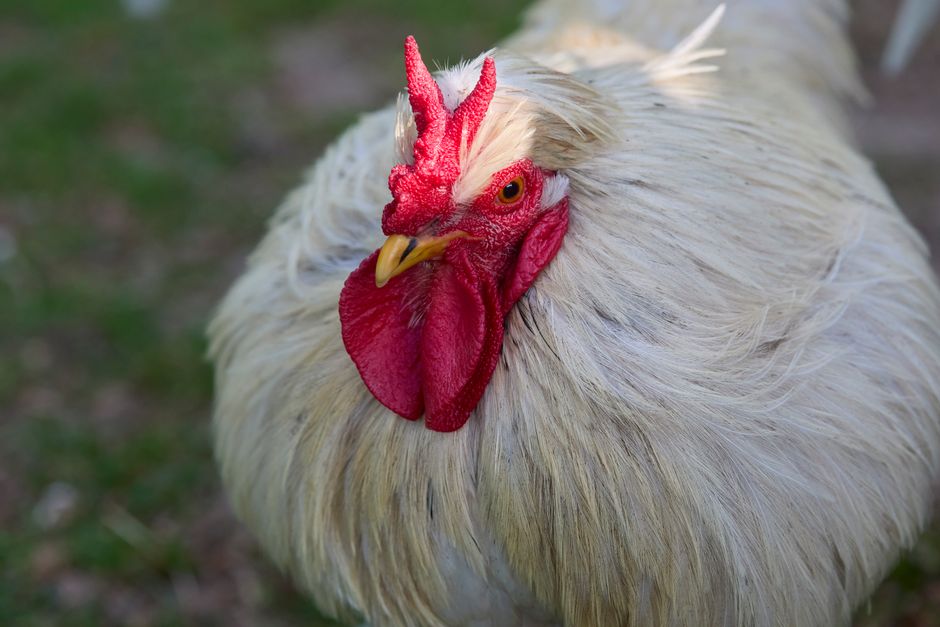
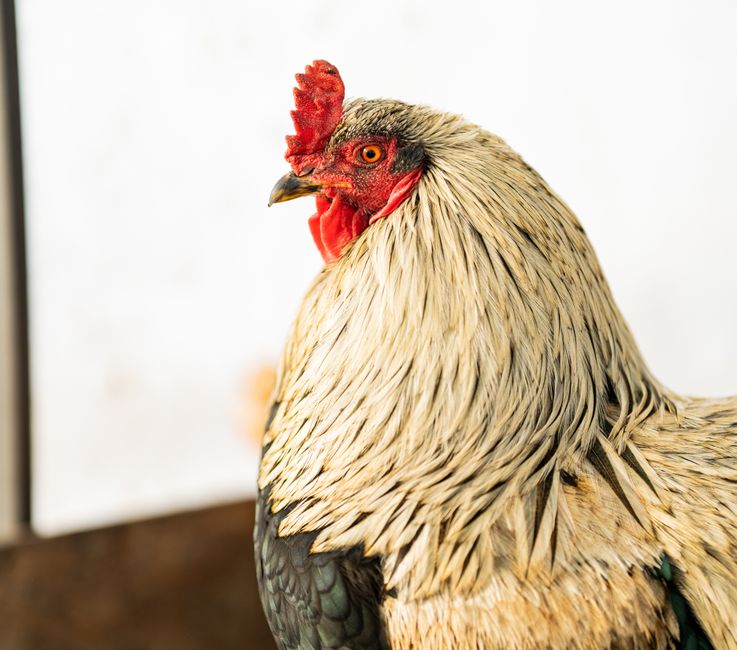
The physical profile is distinctive. Orpingtons carry a massive amount of feathering on a medium-to-large body, which makes them look even bigger than they are. A standard hen typically weighs between 7 and 8 pounds. Roosters top out around 10 pounds. The feathers lay close and fluffy rather than sleek, and the bird carries itself upright with a curved back and full, round tail. The comb is a single comb, small to medium, and the face is red with reddish bay eyes. Everything about the silhouette says “substantial.”
Temperament and Flock Dynamics
Here’s the hard truth: Orpingtons are terrible at defending themselves. They’re gentle to a fault, and in a mixed flock, that becomes a real liability. I kept a trio of Buff Orpington hens with some Rhode Island Reds years ago, and the Reds bullied them relentlessly at the feeder. The Orpingtons lost weight before I caught on. Now I either keep them with other docile breeds like Cochins, Brahmas, or Sussex, or I make sure there are enough feeders spread around the coop and run that lower-ranking birds can eat without being harassed.
That gentleness, though? It’s what makes them spectacular with children and beginner keepers. They tolerate handling with a patience that most breeds simply don’t have. I’ve watched kids as young as four carry Buff Orpington hens around a yard without the bird so much as squawking. They go broody regularly, and when they do, they’re some of the most dedicated and gentle mothers you’ll find. If you want a hen to hatch and raise chicks, an Orpington is a top-tier choice.
Most Orpington roosters follow the breed’s temperament. They’re calmer than, say, a production Rhode Island Red rooster. That said, a rooster is still a rooster. I’ve met friendly Orpington cockerels that turned aggressive at sexual maturity, so don’t let the breed’s reputation make you drop your guard entirely.
They’re not particularly flighty. They rarely try to escape a fenced run, and they’re content to free-range without wandering too far from home. That predictability makes daily management much less stressful.
Egg Production: What to Realistically Expect
3 BEST CHICKEN BREEDS | Backyard & Family Flocks | Favorite Poultry Varieties For Beginners | Chicks · Oak Abode on YouTube
| Aspect | Orpington | Leghorn | Easter Egger |
|---|---|---|---|
| Eggs per Year | 150-200 | 280-300 | Varies (mentioned as seasonal layer) |
| Egg Color | Light brown | White | Varies |
| Winter Laying | Consistent | Significantly reduced | Reduced |
| Pullet Lay Age | 19-24 weeks | 16-18 weeks | Not specified |
| Temperament | Docile, broody | High-energy | Not specified |
| Size (Hen) | 7-8 lbs | Smaller | Medium |
| Size (Rooster) | ~10 lbs | Smaller | Medium |
Orpingtons are classified as dual-purpose birds, but let’s be honest: if you’re keeping them primarily for eggs, you’re accepting a trade-off. A healthy Buff Orpington hen will lay somewhere between 150 and 200 large, light brown eggs per year. Compare that to a production Leghorn pushing 280 to 300 eggs annually, and you can see the gap clearly.
What Orpingtons bring to the table is consistency in cold weather. Their heavy feathering insulates them beautifully, and many keepers report continued laying through winter months when thinner-feathered breeds slow down significantly. I’ve had Buff Orpington hens laying steadily in temperatures below 20°F while my Easter Eggers took the season off entirely.
The broodiness factor cuts both ways. An Orpington hen that goes broody stops laying for the duration of the brood, and it can take weeks for her to break. If you’re tracking egg production closely, that’s a hit you need to plan for. On the other hand, that broodiness is priceless if you want naturally hatched chicks.
Pullets typically start laying around 19 to 24 weeks of age. That’s later than high-production breeds that come online at 16 to 18 weeks, but it’s not unusual for heavier breeds. Once they hit their stride in their first full laying year, production is steady and reliable.
Care, Housing, and Feeding Requirements
Orpingtons don’t need a fancy setup, but they do need enough space. Because of their size and their calm, non-active temperament, they can become overweight easily. I’d recommend a minimum of 4 square feet per bird inside the coop and 10 square feet per bird in the run, and honestly, more is always better. A sedentary, overweight hen is a health problem waiting to happen.
Nesting boxes should be sized appropriately. Standard 12x12 inch boxes are fine for most chickens, but Orpingtons are big birds. A 14x14 inch box gives them room to turn around comfortably and encourages clean laying habits. I use washable nesting box pads to keep things tidy and reduce the chance of dirty eggs. These nesting box pads on Amazon make cleanup fast, and your nest stays dry between full cleanings. (This site may earn a commission on qualifying purchases.)
Roost bars should be lower than you might use for lighter breeds. Orpingtons are heavy and can injure their feet and legs jumping down from a high roost. I keep my roost bars no higher than 18 to 24 inches off the ground for big breeds. Bumblefoot, a common infection in the foot pad, is more frequent in heavy birds that repeatedly land hard. Low roosts and good bedding go a long way toward prevention.
Feeding is straightforward. A quality layer pellet with 16% protein covers the basics for laying hens. I supplement with oyster shell on the side and offer scratch grains as a cold-weather treat, not as a dietary staple. Too much scratch and too little protein leads to fat hens with thin-shelled eggs. If you’re mixing flocks of different ages, an all-flock feed with separate calcium supplementation is more practical. Manna Pro Layena Plus is a reliable option I’ve used for years. (This site may earn a commission on qualifying purchases.)
Water access is non-negotiable. Orpingtons’ heavy feathering means you need to check that their face feathering isn’t getting saturated and chilled around waterers in cold weather. A nipple waterer keeps things cleaner and drier than an open pan. Horizontal nipple waterers are my go-to for keeping bedding dry and water clean. (This site may earn a commission on qualifying purchases.)
Step-by-Step: Setting Up for a New Orpington Flock
If you’re starting from scratch with Orpingtons, here’s the practical order of operations:
Step 1: Source your birds thoughtfully. Hatchery birds will be productive and healthy but won’t win shows. Heritage-quality Orpingtons from reputable breeders produce birds closer to the breed standard, with better type and often calmer temperaments. Decide what matters to you before you spend money.
Step 2: Set up the brooder correctly for chicks. Start at 95°F in week one, reducing by 5°F each week until they’re fully feathered at around 6 to 8 weeks. Use a heat plate rather than a heat lamp for fire safety. Orpington chicks are vigorous and grow quickly.
Step 3: Plan your coop before they arrive. Calculate space at 4 square feet per bird minimum inside. Add low roost bars at 18 to 24 inches. Install nesting boxes at one box per 3 to 4 hens. Add ventilation at the top of the coop walls to reduce moisture without creating drafts at roost height.
Step 4: Prepare the run with enrichment. Orpingtons are not natural foragers the way Leghorns or Easter Eggers are. Put a dust bath in the run. Add a few logs or stumps for low perching. Boredom in confined birds leads to feather picking, and Orpingtons’ fluffy feathering makes them tempting targets.
Step 5: Introduce to a mixed flock carefully. If you’re adding Orpingtons to an existing flock, use a see-through divider for 2 to 3 weeks before full integration. Never introduce a single bird alone. Add at least two or three Orpingtons at once so no individual bird takes all the pecking-order pressure.
Step 6: Monitor weight and condition. Weigh your hens a few times a year. A Buff Orpington hen creeping above 9 pounds is likely getting too little activity and too many treats. Trim back scratch grains and make sure the run encourages movement.
Breed Comparison: Orpingtons vs. Common Alternatives
Sources
- These nesting box pads on Amazon
- Manna Pro Layena Plus
- Horizontal nipple waterers
- Erwin Bosman
- continued laying through winter months when thinner-feathered breeds slow down s
| Feature | Buff Orpington | Barred Plymouth Rock | Australorp | Cochin |
|---|---|---|---|---|
| Annual eggs | 150-200 | 200-280 | 250-300 | 100-160 |
| Egg color | Light brown | Brown | Brown | Brown |
| Temperament | Very docile | Calm, friendly | Gentle | Very docile |
| Broodiness | High | Occasional | Occasional | Very high |
| Cold hardiness | Excellent | Good | Good | Excellent |
| Beginner friendly | Excellent | Excellent | Excellent | Good |
| Dual-purpose | Yes | Yes | Lean | Yes |
The Australorp deserves a second look. It’s basically what you get if you want Orpington-adjacent temperament with significantly better egg production. Australorps were developed in Australia using Orpington stock, and the world record for hen-day egg production, 364 eggs in 365 days, belongs to an Australorp. If someone tells me they love everything about Orpingtons but wish for more eggs, I point them toward Australorps.
Orpingtons won’t set any records in the egg basket, and they’ll never be the hardiest bird in a rough environment. But if you want a chicken that your kids can name and carry around, a hen that will raise her own chicks with genuine dedication, and a flock that looks like it belongs on a painted barn calendar, you’d be hard-pressed to do better. After 12 years of keeping dozens of breeds, I still make room for at least a few Orpingtons in my flock every single season. Some things just earn their place.
Photo: Erwin Bosman via Pexels