 Sarah Mills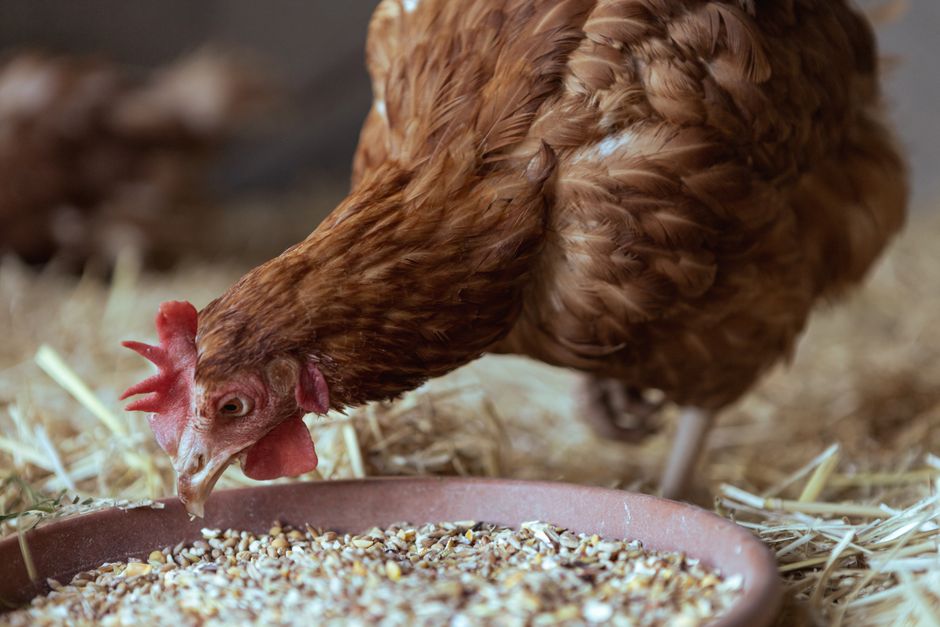
Organic chicken feed costs more than conventional. Sometimes a lot more. And if you’ve just bought your first 50-pound bag of Scratch and Peck Feeds Cluckin’ Good Organic Layer Mash for $42 versus the $18 Dumor bag sitting right next to it at Tractor Supply, you might be wondering whether you just made a very expensive rookie mistake.
Here’s what I tell people when they ask me that question: it depends on why you’re keeping chickens in the first place.
That’s not a dodge. I’ve fed both. I’ve run flocks on conventional pellets for years, then switched, then switched back during a supply shortage, then switched again. I have opinions. Let me share them honestly.
What “Organic” Actually Means on a Feed Bag
The USDA organic certification for poultry feed means the grains and ingredients were grown without synthetic pesticides, synthetic fertilizers, or genetically modified organisms. It does not mean the feed is nutritionally superior by default. It doesn’t mean no pesticides at all. Organic pesticides exist and are allowed. And it absolutely does not mean the protein, calcium, or amino acid profile is better formulated.
I see people conflate “organic” with “better feed” all the time, and those are genuinely different things. A poorly formulated organic feed can underperform a well-formulated conventional one. What you’re paying for with the organic label is how the inputs were grown, not how carefully the nutritionist designed the ration.
But there are real reasons to care about that distinction. If you’re selling eggs at a farmers market and your customers care about pesticide residues, organic feed matters to your brand. If you’re feeding chickens that are also providing meat for your family and you have concerns about what accumulates in fat tissue, organic feed is a reasonable choice. If you’re just trying to keep laying hens in the backyard and you eat the eggs yourself with no particular feelings about conventional agriculture, you might decide the price gap isn’t worth it to you. All of those are defensible positions.
What I Actually Look for in a Feed Label (Organic or Not)
Before I care about the organic certification, I want to see the protein percentage and the ingredient list. Laying hens need 16-18% protein. Some feeds go higher, but anything above 18% for a standard laying hen is honestly overkill and probably a waste of money. Below 16% and you’ll see it in your shells, which get thin and fragile, and in overall egg production.
The ingredient list should lead with a whole grain or grain meal. Corn, wheat, peas, soybean meal, and fish meal are all normal and fine. What I don’t want to see is the first three ingredients being byproduct fractions or filler grains with the actual protein source buried halfway down the list.
Scratch and Peck makes a soy-free organic layer feed that I’ve had good results with. Their Naturally Free Organic Layer Feed runs around $45-50 for 25 pounds, which is genuinely expensive, but the ingredient quality is visible. The kernels are whole, it smells like actual food, and my hens’ yolk color was noticeably deeper orange within about two weeks of switching. The soy-free formulation is worth it if you have a sensitivity concern or you’re selling to customers who request it.
Modesto Milling is another brand worth knowing. They do certified organic pellets and mash, they ship in larger quantities, and the price per pound is more reasonable if you’re feeding more than a handful of birds. Azure Standard also carries organic feed if you have a route near you and can order in bulk.
The Price Math Nobody Does Until They’re Knee Deep in Feed Bills
10 Chicken Coop Mistakes you DON'T want to Make ! · Carolina Coops® on YouTube
| Scenario | Feed Type | Cost per 50 lbs | Weekly Cost (6 hens) | Annual Cost (6 hens) |
|---|---|---|---|---|
| Budget backyard flock | Conventional pellets | $18 | $4.00 | ~$208 |
| Organic preference | Organic feed | $42 | $9.25 | ~$481 |
| Price difference | - | $24 | $5.25 | ~$273 |
A standard laying hen eats roughly a quarter pound of feed per day. A backyard flock of six hens eats about 10-11 pounds of feed per week. At $18 for 50 pounds of conventional pellets, you’re spending about $4 a week on feed. At $42 for 50 pounds of organic, you’re spending about $9.25 a week. Over a year, that’s the difference between roughly $208 and $481 for those six hens.
Whether $273 a year matters to you is a personal question.
One thing that genuinely helps is supplementing with fermented feed. I ferment a portion of my flock’s organic grain ration by soaking it in water for 3-4 days until it gets that slightly sour, bubbly smell. Fermented feed improves digestibility, which means your birds extract more nutrition from the same amount of feed. My own observation, over multiple fermentation trials with my current flock of 11, is that consumption drops by about 15-20% when I’m consistently offering fermented grain alongside dry pellets. That’s real money. A simple food-grade 5-gallon bucket is all you need to start fermenting.
Does Organic Feed Actually Produce Better Eggs?
The research here is genuinely mixed. Most studies comparing organic versus conventional egg nutrition show small or inconsistent differences when the hens are managed the same way otherwise. A 2010 Penn State study did find higher omega-3s and more vitamin D in pasture-raised eggs, but the variable there was pasture access and sunlight, not feed certification.
The honest answer is that what your hens eat from the ground, how much sunlight they get, and how much space they have probably affects your egg quality more than whether the corn in their pellets was grown with synthetic nitrogen. A hen on cheap conventional feed with good pasture access will likely produce better eggs than a hen on premium organic feed locked in a run with no grass.
Where I do think organic feed makes a difference is in what it doesn’t contain. Fewer pesticide residues in the feed means fewer in the eggs, even if the numbers are small. That matters more to some people than others, and I’m not going to tell you it should matter to you.
Storing Feed So You Don’t Throw Money Away
Sources
- Their Naturally Free Organic Layer Feed runs around $45-50 for 25 pounds
- food-grade 5-gallon bucket
- A 31-gallon Behrens can
- Павел Гавриков
- here is genuinely mixed
One thing people underestimate is how quickly organic feed can go rancid or grow mold, especially in summer. Because organic feeds don’t use synthetic preservatives, the fats in the grain oxidize faster. A 50-pound bag of organic layer feed left in a hot garage for six weeks is a 50-pound bag of garbage.
I store all feed in a metal galvanized trash can with a tight lid. A 31-gallon Behrens can holds about 50 pounds of pellets with room to spare and keeps rodents out completely. I buy no more than a 2-3 week supply at a time in summer. In winter I can stretch to a month. This matters even more with mash and crumble forms, which have more surface area exposed to air and moisture.
If your feed smells musty, oily-rancid, or just “off,” don’t feed it. Aflatoxin from moldy grain is a real problem and can cause liver damage in your birds.
Photo: Павел Гавриков via Pexels