 Dr. Tom Henderson
300 eggs per year. That’s the number that sells more Leghorns than any marketing copy ever could, and honestly, it’s not even an exaggeration for a well-managed flock. The American Poultry Association’s breed standard pegs White Leghorns as one of the highest-producing laying breeds in existence, and the commercial egg industry didn’t build itself almost entirely around one breed by accident. Walk into any grocery store in America, crack open a carton of white eggs, and there’s a better-than-90% chance a Leghorn laid it.
But here’s what the hatchery websites gloss over: Leghorns are not beginner-friendly birds. They’re loud, they’re flighty, they’ll clear a six-foot fence without much effort, and they have zero interest in being held. I’ve watched first-time chicken keepers fall in love with that egg count, bring home a dozen Leghorn pullets, and be completely blindsided by what they’d actually signed up for. The production stats are real. The temperament is also real.
So let me give you the actual picture.
- White Leghorns average 280-320 eggs per year under good management; some strains approach 350.
- They start laying earlier than most breeds, often at 16-17 weeks vs. the 20-24 week average.
- Leghorns are heat-tolerant but cold-sensitive; their large single combs need frostbite protection below 20°F.
- They're not dual-purpose: a Leghorn cockerel dresses out at barely 4 lbs, not worth the feed cost.
- Backyard Leghorns are significantly noisier and more flightily reactive than calm dual-purpose breeds like Orpingtons or Australorps.
The Egg Production Numbers, Interpreted
Commercial operations using White Leghorn strains from companies like Hy-Line or Lohmann consistently document 320-350 eggs per hen per year in controlled environments. Backyard birds from hatchery stock (think McMurray, Cackle, or Meyer) realistically hit 280-310. That gap matters, and here’s why: commercial strains are selected purely for output, sometimes at the expense of longevity and disease resistance. Hatchery birds are a couple generations removed from that extreme selection pressure, which is actually a feature if you’re keeping chickens for more than one production cycle.
What most people don’t realize is how much the timing matters. Leghorns begin laying remarkably early. In my experience with a flock of 18 White Leghorn pullets I ordered from Cackle Hatchery, the first eggs appeared at 16 weeks and 4 days. Most dual-purpose breeds I’ve kept (Barred Rocks, Buff Orpingtons, Black Australorps) don’t start until week 20 at the earliest, often week 22 or 23. Those extra five or six weeks of production per bird add up to roughly 30 to 40 eggs before a heavier breed has even started. Over a laying career, that’s real money.
They also front-load their production. A Leghorn in her first laying year is operating near peak capacity from the start. Production drops off more sharply after year two than with some dual-purpose breeds. If you’re running a backyard egg business and selling at farmers markets, you’ll want a rolling replacement flock rather than keeping the same birds for four or five years.
Leghorn Varieties: It’s Not Just White
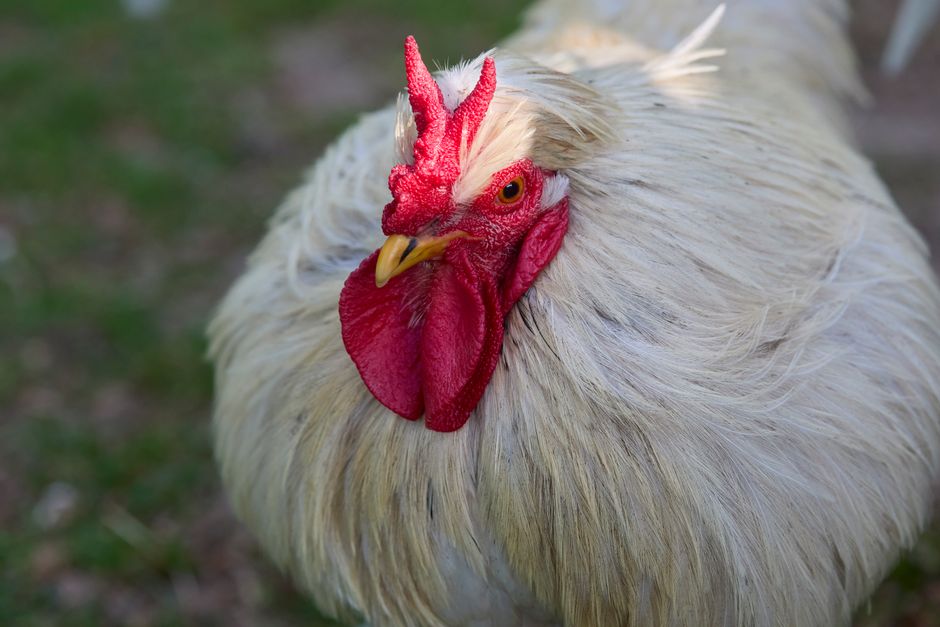
Most people say “Leghorn” and picture the white bird. And in commercial production, that’s accurate. But the APA recognizes 16 color varieties of Leghorn, and a few of them are worth knowing about if you’re keeping backyard birds.
White is the production standard. If egg count is your primary goal, this is your bird.
Brown Leghorns (also called Red Leghorns) are the original type, imported from Livorno, Italy, in the 1850s. They lay nearly as well as Whites but are slightly calmer and, in my opinion, better suited to free-range setups where some wariness toward predators is actually an asset.
Black Leghorns and Exchequer Leghorns exist, are beautiful birds, and are harder to source. Exchequer Leghorns carry a spotted black-and-white pattern that’s genuinely striking. If you want something unusual for a show flock that still produces serious eggs, they’re worth tracking down through specialty breeders. The Livestock Conservancy maintains a breeder directory that’s helped me find uncommon varieties in the past.
There are also bantam Leghorns, which are popular with show enthusiasts. Bantam hens lay a smaller egg but do so with the same stubborn frequency as their full-sized counterparts. I don’t have personal numbers on bantam annual production, so I can’t give you a confident comparison.
What “Flighty” Actually Means Day-to-Day
3 BEST CHICKEN BREEDS | Backyard & Family Flocks | Favorite Poultry Varieties For Beginners | Chicks · Oak Abode on YouTube
I thought I understood what “flighty” meant before I kept Leghorns. I didn’t.
A Barred Rock that spooks from a shadow will resettle in 30 seconds. A Leghorn that spooks will launch herself into the air, crash into the side of the coop, startle three other birds, and set off five minutes of alarm calling that your neighbor will definitely hear. I have a 7-foot run fence. One of my White Leghorn hens found a corner post, made it to the top, and launched herself into the yard on day four. She was completely fine. She just didn’t want to be in the run that afternoon. That was her decision.
This isn’t just an annoyance. It has practical implications:
Your coop and run need covered or very high fencing. A standard 4-foot chicken wire run does not contain adult Leghorns. Six feet minimum, and even then I’d cover the top if you’re in a suburban lot with ordinance concerns.
They’re terrible for small children. I’ve seen kids do everything right, approach slowly, crouch down, move calmly, and still send a Leghorn into a screaming panic. They don’t bite, they just won’t tolerate handling, and their alarm calls are genuinely loud. If you’re keeping chickens partly so your kids can interact with the flock, get Buff Orpingtons or Speckled Sussex instead.
Free-ranging is where Leghorns actually shine. They’re alert, fast, and smart about predators. In a genuinely free-range situation with good cover, their reactivity is a survival mechanism, not a bug. I’ve run mixed flocks where the Leghorns were reliably the first to call an aerial predator alarm, which saved more than one docile Orpington hen from a Cooper’s hawk.
Feed, Costs, and What You’ll Actually Spend
Leghorns are on the smaller side: mature hens run 4 to 4.5 lbs, compared to 6.5 to 8 lbs for a dual-purpose Orpington. That size difference matters for your feed bill. A lighter body means less maintenance energy and more calories directed toward egg production, which is part of why the feed conversion ratio on Leghorns is so favorable.
| Breed | Avg Hen Weight | Feed/Day (approx) | Annual Feed Cost (est.) | Eggs/Year | Cost Per Egg |
|---|---|---|---|---|---|
| White Leghorn | 4.3 lbs | 3.6 oz | $28-32 | 300 | $0.10 |
| Rhode Island Red | 6.5 lbs | 4.5 oz | $35-40 | 250 | $0.14 |
| Buff Orpington | 7.5 lbs | 5.0 oz | $38-44 | 200 | $0.19 |
| Barred Rock | 6.5 lbs | 4.5 oz | $35-40 | 230 | $0.15 |
| Golden Comet | 5.0 lbs | 4.0 oz | $30-34 | 280 | $0.11 |
Feed cost estimates based on layer pellets at $22-24 per 50 lb bag as of July 2026, Pacific Northwest pricing. Your region will vary.
The cost per egg figure is where Leghorns really make the argument for themselves. If you’re selling eggs at farmers markets (currently $6-8 per dozen at markets I’ve visited in the Willamette Valley this summer), that production efficiency matters. A reader I heard from last spring, Julie from Medford, Oregon, was running 24 Leghorn hens alongside 12 Barred Rocks. She tracked every bag of feed for a full calendar year and found her Leghorns produced 29% more eggs while consuming 18% less feed per bird. The math isn’t subtle.
Comb Care and Cold Weather
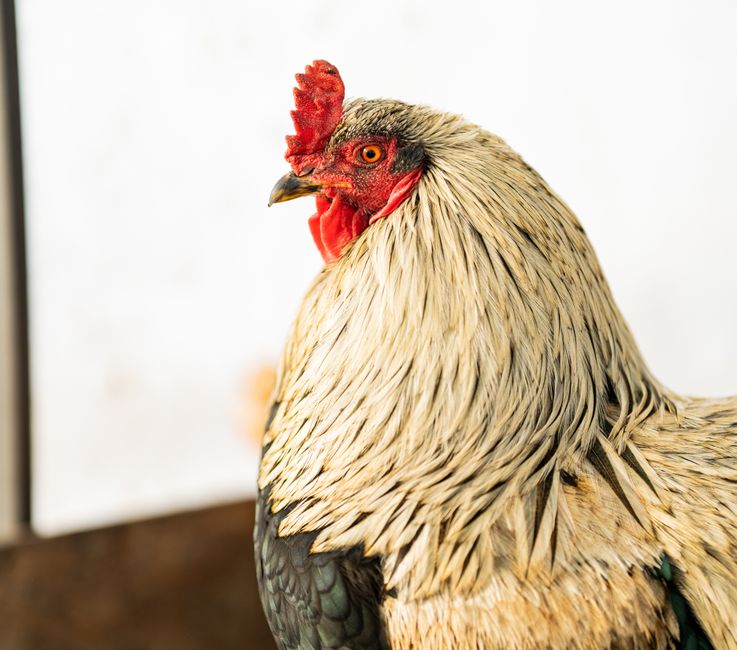
The big single comb on a White Leghorn is both a beautiful thing and a liability. In temperatures below about 20°F, those long comb points will frostbite, and frostbite on a comb isn’t cosmetic. It’s painful, it can get infected, and in roosters it can affect their overall health and behavior.
The standard advice is petroleum jelly applied to the comb on nights when temps drop below freezing. That works, but here’s the thing nobody mentions until you’ve done it: the bird needs to be calm or you’ll spend 15 minutes chasing a panicked Leghorn around a dark coop in January. Either handle them from early pullet-hood to build some tolerance (possible, not easy), or wait until they’ve roosted and gone quiet, then apply with a headlamp. I’ve done this more times than I’d like to admit.
Alternatively, if you’re in a genuinely cold climate, Minnesota, upstate New York, the Montana high country, consider a Leghorn-adjacent breed that gives you better production than an Orpington but with a pea comb or rose comb that handles cold better. Easter Eggers and Dominiques are reasonable compromises. I don’t personally keep Leghorns in climates that regularly drop below 0°F. The comb management gets old.
Sources
- University of Kentucky Extension (2023): “Breeds of Chickens” publication, poultry breed production data referenced for egg counts and breed weights.
- American Poultry Association “American Standard of Perfection” (current edition): Official breed standard for Leghorn varieties, weight classifications, and recognized color varieties.
- Hy-Line International W-36 performance standards (2025 publication): Commercial Leghorn strain production benchmarks cited for 320-350 egg range.
- The Livestock Conservancy breed conservation resources: Poultry breed status listings and breeder directories referenced for uncommon Leghorn varieties.
- Penn State Extension “Feeding Chickens in Small and Backyard Flocks”: Feed consumption estimates and layer nutrition guidelines referenced for cost-per-egg calculations.
Photo: Magda Ehlers via Pexels