 Sarah Mills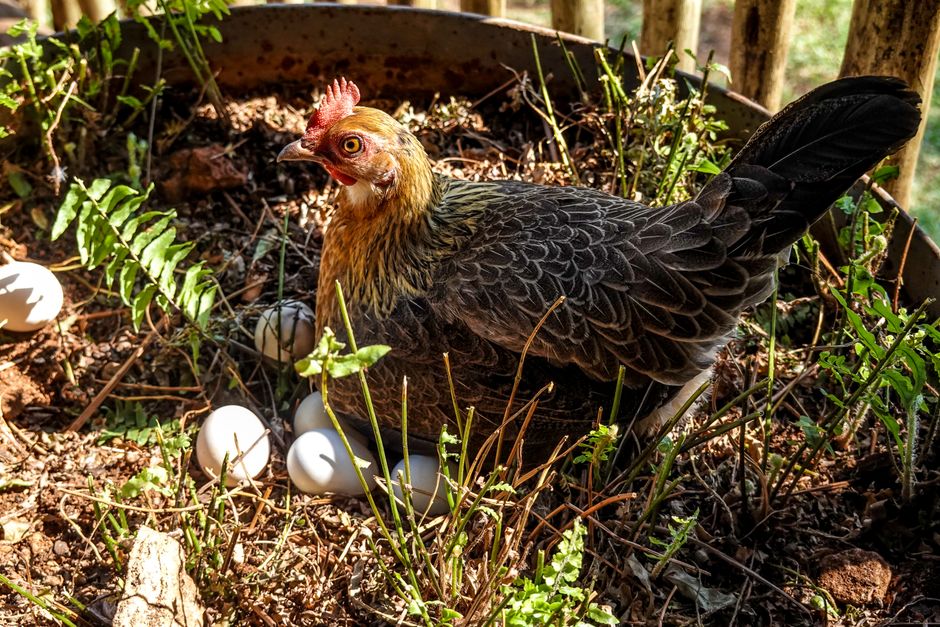
A brand-new hen from a production breed can lay up to 300 eggs in her first year. That’s nearly an egg a day, almost every single day, for twelve months straight. If you’ve just brought home your first flock expecting that kind of output from every bird, every year, you’re about to be disappointed. Egg production is way more variable than most beginners expect, and understanding what drives it will save you from standing at an empty nesting box wondering what went wrong.
What Determines How Often a Chicken Lays
Light is the single biggest factor. Hens need roughly 14 to 16 hours of light per day to maintain peak production. Their bodies detect light through the eye, which triggers the hypothalamus, which signals the pituitary gland to release the hormones that start the ovulation cycle. No light signal, no egg.
A hen’s reproductive cycle takes about 24 to 26 hours from start to finish: ovulation, then the yolk travels down the oviduct picking up albumen (egg white), membranes, and finally the shell, and the finished egg gets laid. Because that cycle runs slightly longer than 24 hours, a hen who lays at 8 a.m. on Monday will typically lay at 9 or 10 a.m. on Tuesday, and a bit later each day after that. Eventually she’ll skip a day entirely and “reset.” This is completely normal.
Breed matters enormously too. A production Leghorn or a Golden Comet is bred specifically to convert feed into eggs as efficiently as possible. Heritage breeds like Dominiques or Buckeyes are more modest layers. Ornamental breeds like Silkies or Polish might give you 2 to 3 eggs a week on a good week. Knowing your breed before you buy is half the battle if consistent egg production is your goal. You can compare options in our guide to the best egg laying chickens.
Egg Production by Age: What to Expect Year by Year
| Life Stage | Typical Age | Expected Laying Frequency | Notes |
|---|---|---|---|
| Pullet | 16-24 weeks | Starting; irregular | First eggs often small or irregular; system calibrating |
| Year 1 | ~1 year | 200-320 eggs/year | Peak production; breed-dependent |
| Year 2 | ~2 years | 170-272 eggs/year | 15-20% decline from Year 1 |
| Year 3+ | 3+ years | Gradual decline | By Year 4, often 2-4 eggs/week |
| Molt | Once yearly (fall) | Minimal to none | Lasts 8-12 weeks; completely normal |
Age has a dramatic and predictable effect on laying frequency.
Pullets (under 1 year): Most hens start laying between 18 and 24 weeks, though some breeds like Australorps can start as early as 16 weeks and slower breeds like Jersey Giants might take 6 months or more. The first eggs are often small and irregular. You might find a tiny pullet egg, a double-yolker, or even a soft-shelled egg while her system calibrates. Give her a few weeks and things usually even out.
Year 1: Peak production happens here. Well-bred layers hit their stride. A Leghorn can realistically deliver 280 to 320 eggs in her first laying year. Most good layers average somewhere between 200 and 280.
Year 2: Production typically drops 15 to 20 percent compared to year one. Your hens will still lay consistently, just not quite as often.
Year 3 and beyond: Each subsequent year brings another noticeable decline. By year four, even a previously excellent layer might be giving you 2 to 4 eggs per week rather than 5 to 6.
Molt: Once a year, usually in fall, hens drop and replace their feathers. Laying slows dramatically or stops entirely during this period, which typically lasts 8 to 12 weeks. This is completely natural and not a sign anything is wrong.
Seasonal Changes and How Light Affects the Nest Box
8 Beginner Chicken Care Mistakes To Avoid | Backyard Chickens 101 | Egg Laying Hens and Chicks · Oak Abode on YouTube
Walk out to your coop in December and you might find nothing. Walk out in June and the boxes are stacked. That’s light at work.
In late summer, as days get shorter, hens sense the change and begin winding down production. Many backyard flocks drop to almost nothing through December and January. Come February, as daylight creeps back past 12 hours, things pick back up on their own.
Some keepers add supplemental light in winter, using a simple 40 to 60-watt bulb (or LED equivalent) on a timer to bring the total light exposure up to 14 to 16 hours. This keeps hens producing through the short days. There’s a legitimate debate about whether this is good practice long-term, since it uses up a hen’s finite supply of follicles faster. But for backyard flocks where eggs are the point, many people do it with no obvious harm.
If you do use artificial light, add it in the morning rather than the evening. A light that switches on at 4 a.m. and shuts off at sunrise gives hens a natural dusk to wind down by. Abrupt darkness can leave birds disoriented and stressed.
Cold temperatures alone don’t stop egg production, but extreme cold can slow it down. Keeping your coop draft-free and properly insulated matters more than most people realize. Good chicken coop ventilation removes moisture without creating the cold drafts that stress birds and reduce laying.
Why Your Hen Suddenly Stopped Laying
This is the question I get more than almost any other. One day you’re getting 6 eggs from 6 hens, the next day you’re getting 2. Here’s a working checklist of the most common causes.
Step-by-step troubleshooting guide:
Check for molt. Look at your birds. Are feathers loose? Are you finding feathers everywhere in the coop? If yes, molt is almost certainly the culprit. Wait it out and increase protein intake to help them through.
Assess the light. Count actual hours of daylight. If you’re below 14 hours and haven’t added supplemental light, this is likely the cause. Add a timer light or accept seasonal production drops.
Look for hidden nests. Hens are sneaky. If a hen found a spot under the shrubs or behind the feed bin, she may be laying there instead of the box. Do a full yard sweep.
Check the feed. A hen needs about 20 grams of protein per day to maintain laying. Switching to a lower-protein feed, running out of feed, or suddenly changing brands can cause a drop. Layer pellets should contain at least 16 to 18 percent protein. Our chicken feed types explained guide breaks this down in detail.
Look for stress triggers. New birds added to the flock, a predator scare, a dog charging the run, even a change in your own schedule can stress a flock enough to pause laying for several days.
Rule out illness. Respiratory infections, infectious bronchitis, and egg drop syndrome all affect laying. If birds look unwell, lethargic, or have discharge, call an avian vet.
Check for parasites. Heavy mite or lice infestations are exhausting and will tank production. Inspect birds around the vent and under wings regularly.
Breed Comparison: Egg Production at a Glance
Not all chickens are created equal when it comes to the nest box. Here’s a realistic breakdown:
| Breed | Eggs Per Year (Avg) | Egg Color | Peak Laying Age |
|---|---|---|---|
| Leghorn | 280-320 | White | 16-18 weeks |
| Golden Comet | 250-300 | Brown | 16-18 weeks |
| Rhode Island Red | 200-280 | Brown | 18-20 weeks |
| Australorp | 250-300 | Brown | 16-18 weeks |
| Plymouth Rock | 200-280 | Brown | 18-22 weeks |
| Easter Egger | 200-280 | Blue/Green | 20-24 weeks |
| Wyandotte | 180-220 | Brown | 18-22 weeks |
| Silkie | 80-120 | Cream | 24-28 weeks |
| Cochin | 100-160 | Brown | 24-28 weeks |
Easter Eggers are a particularly fun option if you want decent production plus colorful eggs. Read more about them in our Easter Egger chickens profile.
If you’re just getting started and want a flock that balances temperament and production, our best chicken breeds for beginners guide will point you in the right direction.
Maximizing Egg Production: Practical Tips That Actually Work
You can’t make a hen lay more eggs than her biology allows, but you can absolutely remove the obstacles that cause her to lay fewer.
Feed quality is non-negotiable. Layer feed with 16 to 18 percent protein is the baseline. During molt, switch to a higher-protein grower or flock raiser (around 20 percent) to help feathers come back faster. A feeder like this one on Amazon that minimizes waste pays for itself quickly.
Shells are mostly calcium. If hens don’t get enough, they’ll either lay thin-shelled eggs or stop laying altogether. Crushed oyster shell offered free-choice in a separate dish (not mixed into feed) lets each hen regulate her own intake. You’ll also want to make sure your birds have access to grit for proper digestion of any whole grains or scratch.
Keep the nest boxes clean and private. Hens are more likely to use nesting boxes that feel safe and comfortable. Dirty boxes get avoided. Replace bedding regularly and consider nesting box pads designed for easy cleanup. Crowded boxes, where multiple hens compete for the same spot, cause stress and egg-eating behaviors.
Laying requires a significant amount of water. A hen drinking inadequate water will slow laying within 24 hours. In winter, a heated waterer like this one on Amazon keeps water from freezing and production from tanking.
Protect the flock from predator stress. A coyote circling the run at 2 a.m. might not get a single bird, but the stress on the flock is real and measurable. Good chicken coop predator protection is as much about production as it is about safety.
Understanding the rhythm of your hens makes the whole experience more enjoyable and a lot less stressful. Once you stop expecting constant output and start reading the signals, like shorter days, feather loss, or a change in behavior, you’ll work with your flock instead of against it. Most laying slowdowns have a real cause and a real solution. A little attention goes a long way.
Sources
Disclosure: As an Amazon Associate, we earn a small commission from qualifying purchases at no extra cost to you. We only recommend products that genuinely support the topics covered in this article.
- Certified Pet First Aid Kit with Guide Book (~$22), Certified pet first aid kit with step-by-step instructions, an essential item for every pet owner.