 Carol Thompson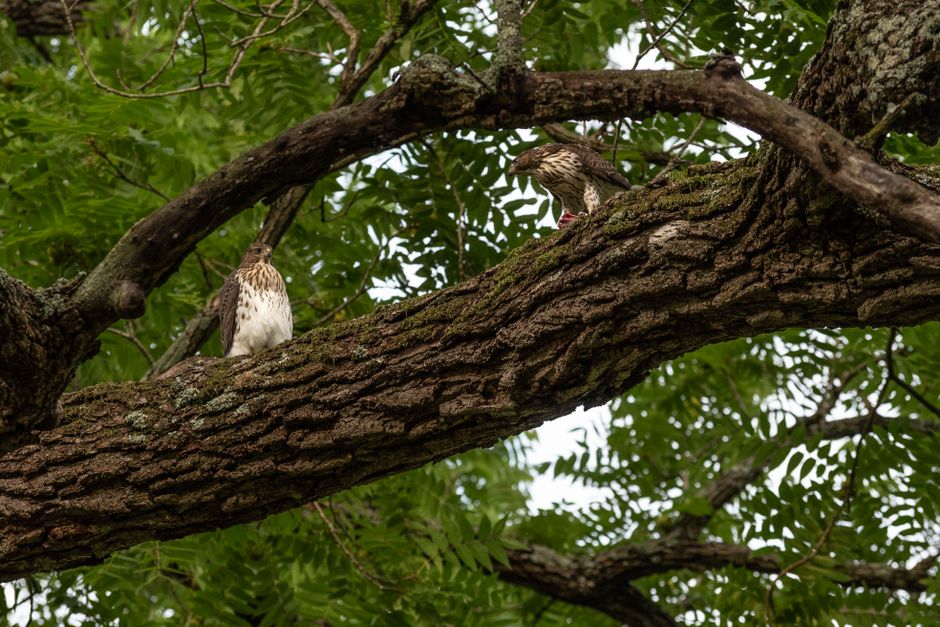
Roughly 300 million birds are killed by raptors in North America every year, according to estimates from the Cornell Lab of Ornithology. Your flock is a small but very convenient subset of that number.
Most chicken-keeping advice on hawks follows a depressing formula: hang some CDs, get a rooster, you’ll be fine. That’s not advice. That’s wishful thinking dressed up as a tip. Hawks are smart, adaptable, and in most of the U.S., federally protected under the Migratory Bird Treaty Act of 1918, which means you cannot legally shoot, trap, or relocate them. Your only real option is deterrence and structural defense. Let’s talk about what actually works.
I’ve lost birds to Red-tailed Hawks, Cooper’s Hawks, and once, humiliatingly, a Sharp-shinned Hawk that couldn’t have weighed more than 9 ounces. The first time I watched a Cooper’s Hawk take a bird, it happened in under four seconds. I stood at the window, still holding my coffee, completely useless.
- Red-tailed and Cooper's Hawks are the two most common backyard flock predators in the continental U.S.
- The Migratory Bird Treaty Act fully protects all raptors, lethal control is illegal and can cost up to $15,000 in fines.
- Hardware cloth overhead netting (not chicken wire) is the only 100% reliable aerial predator barrier.
- Roosters reduce hawk predation measurably, but free-ranging flocks still need overhead cover or netting.
- Guinea fowl alarm calls give chickens roughly 8-12 seconds of warning, enough time to reach cover if it's close enough.
Which Hawks Are Actually Coming For Your Birds
Not all raptors are equal threats. Red-tailed Hawks (Buteo jamaicensis) are the big, slow soaring hawks most people picture. They’re after your full-size hens. Cooper’s Hawks (Accipiter cooperii) are the ones that will make you feel personally targeted: fast, agile fliers that hunt in woodlines and suburban backyards, and they’ll take bantams, juveniles, and even pigeons mid-flight. Sharp-shinned Hawks are the smallest of the accipiter group and mostly go after chicks and very small breeds.
Broad-winged and Red-shouldered Hawks occasionally show up, but they’re primarily hunting rodents and amphibians. Don’t lose sleep over them. The real problem birds are Cooper’s and Red-tails, and in the Pacific Northwest, you can add Red-shouldered to the regular threat list.
Seasonal patterns matter more than most guides admit. According to the Cornell Lab’s eBird migration data, hawk pressure spikes in September through November as juveniles disperse and adults shift territories. Spring, when hawks are feeding nestlings, is the second peak. Midsummer is often your safest window for free-ranging, for what it’s worth.
The Real Cost of Losing Birds
A production Red Sex-Link or ISA Brown runs $25-35 as a pullet from a hatchery. A quality Australorp or Orpington from a breeder? Closer to $35-60 depending on lineage. Losing even three birds in a season to a hawk isn’t just emotionally rough; it’s a $75-180 hit before you count the eggs you won’t collect for the next 18 months from that bird.
The numbers shift fast when you’re raising heritage breeds or meat birds. A pasture-raised Cornish Cross batch of 50 birds, priced at roughly $6.50/bird as day-olds from Hoover’s Hatchery (current pricing as of July 2026), represents $325 in stock before you spend a dollar on feed. Losing even 10% of that batch to aerial predators over a 6-week grow-out is a real margin problem.
These are rough estimates assuming an average 15% annual loss rate to aerial predators in unprotected free-range flocks, which aligns with USDA National Agricultural Statistics Service (NASS) data on poultry predation losses.
What Doesn’t Work (And Why People Keep Trying It)
10 Chicken Coop Mistakes you DON'T want to Make ! · Carolina Coops® on YouTube
Reflective tape and old CDs. I tried them. They work for maybe two weeks before the local hawks figure out these shiny things have never once moved to attack anything.
Fake owls, hawk decoys, and plastic predator shapes. Same problem. Hawks aren’t dumb. A stationary fake owl in the same spot every morning is not a threat. A study from Purdue’s Department of Forestry and Natural Resources found that stationary visual deterrents lose effectiveness within 5-7 days for most corvids and raptors. Chickens are smart enough to ignore them too, which tells you something.
Chicken wire overhead. This one genuinely surprises people. Standard poultry netting (the hexagonal stuff) has gaps large enough for a Sharp-shinned Hawk to push through and enough flex that a determined Red-tail can rip a section loose. I’ve seen it happen. If you’re running a covered run with chicken wire, you’re providing psychological comfort, not actual protection.
What Actually Works
Here’s where I’ll commit: hardware cloth overhead, roosters on patrol, and overhead visual cover. Those three, layered, are the best free-range compromise available.
Hardware cloth over a covered run is non-negotiable if you have repeated hawk pressure. Half-inch galvanized hardware cloth (available from Tractor Supply as 100-foot rolls, currently around $95-110 per roll at 2-foot width, or in 4-foot width for about $190-220) is hawk-proof. It’s heavy, it’s expensive, and it’s worth every penny. For a 10x20 covered run, budget $400-600 in materials if you’re covering the top and reinforcing the sides.
Overhead netting is the free-range compromise. Deer netting draped loosely over a pasture area won’t stop a determined hawk from pushing through, but the better option is dedicated poultry netting from Premier1 Supplies. Their ElectroNet poultry fence ($189 for a 164-foot roll as of July 2026) is primarily a perimeter tool, but their overhead bird netting, sold by the square foot, is designed to flex rather than give way.
A realistic comparison of your protection options:
| Method | Cost Range | Effectiveness | Maintenance |
|---|---|---|---|
| Hardware cloth covered run | $400-800 for 10x20 | Near 100% | Low, 10+ year lifespan |
| Poultry overhead netting | $150-350 for 1,000 sq ft | 85-90% | Moderate, sag/snow issues |
| Electric perimeter fence (ground predators) | $190-400 | 0% vs aerial | Low |
| Rooster (large breed) | $0-25 | 40-60% reduction | Ongoing feed cost |
| Guinea fowl (4+ birds) | $15-25/keet | 30-50% alarm improvement | Moderate |
| Reflective tape/decoys | $10-30 | <10% after 2 weeks | Weekly repositioning |
| LGD (livestock guardian dog) | $500-1,500 | 70-85% vs all predators | High, daily care |
Roosters deserve a more honest assessment. A University of Georgia Extension study on poultry predation found that flocks with active roosters experienced measurably lower hawk predation, roughly 30-40% fewer losses compared to hen-only flocks in similar free-range conditions. The mechanism is real: roosters scan the sky, give the aerial alarm call (it’s distinct from the ground predator call), and will physically confront a hawk that lands. Large breeds work better. A Langshan or Delaware rooster at 9 pounds has a fighting chance of driving off a juvenile Red-tail. A Silkie rooster does not.
Dense overhead cover is underrated and basically free. Fruit trees, tall shrubs planted along fence lines, even a simple lean-to structure mid-run give your birds somewhere to bolt when the alarm sounds. I planted three dwarf apple trees in my run eight years ago partly for shade. That canopy has probably saved a dozen birds. Hawks prefer open hunting ground where they can stoop cleanly. Cluttered airspace is their enemy.
When You Have an Active Hawk Problem Right Now
A reader in central Oregon emailed me last winter after losing four birds in nine days to what she eventually confirmed was a Cooper’s Hawk. Here’s what worked:
Scenario: Repeated Cooper’s Hawk targeting in a 1/4-acre free-range yard with no overhead cover. Action taken: Ran three temporary string lines 18 inches apart across the yard at about 6-foot height using 50-lb braided fishing line, added a large-breed rooster (borrowed from a neighbor for two weeks), and kept the flock confined until 10 a.m. each day since Cooper’s Hawks are most active at dawn. Result: Zero losses in the following six weeks. The hawk shifted territory.
The fishing line trick works because raptors hunt by spotting from altitude and then committing to a stoop. Anything that disrupts the visual line of attack or the physical airspace causes them to abort. They’re not suicidal.
If you have a hawk actively sitting on your property, contact the USDA Wildlife Services office for your state. They cannot remove protected raptors, but they can legally install hazing devices and work with you on deterrence plans at no cost in most states. Depredation permits for temporarily scaring (not harming) raptors are available in documented cases of repeated livestock loss.
Breed Selection Matters More Than You Think
Some breeds are better at self-preservation than others. This is real, not folk wisdom.
Mediterranean breeds like Leghorns are flighty, alert, and fast. They’re also terrible at staying calm under pressure, which can actually make them easier prey if the whole flock panics at once. Dual-purpose breeds like Barred Rocks, Dominiques, and New Hampshire Reds tend to respond well to alarm calls and move for cover without scattering into the open. In my experience, Dominiques are the sharpest prey-awareness birds I’ve kept. They’re watching the sky constantly.
Silkies, Cochins, heavily feathered breeds, and Polish birds with crests that block upward vision are hawk-bait. I say this without judgment because I’ve kept all of them, but you should go in knowing that a frizzle Cochin is not built to survive a Cooper’s Hawk encounter the way a Rhode Island Red is.
Sources
- Cornell Lab of Ornithology, eBird Migration Database: Annual raptor migration timing and geographic distribution data, used for seasonal predation pattern analysis.
- USDA National Agricultural Statistics Service (NASS), Poultry Predation Survey: Estimates of annual predation losses by type, used for loss rate calculations.
- Migratory Bird Treaty Act of 1918 (16 U.S.C. 703-712): Federal statute governing raptor protection, applicable penalties cited from U.S. Fish & Wildlife Service enforcement guidelines.
- University of Georgia Extension, Poultry Science Department: Extension research on flock management and predation reduction strategies, including rooster effect data.
- Purdue University, Department of Forestry and Natural Resources: Research on visual deterrent effectiveness timelines in corvid and raptor species.
Photo: Chris F via Pexels