 Dr. Tom Henderson
My first flock of free rangers looked fat and happy all summer, and then October hit and I found myself staring at a feeder that barely moved for three days straight. I assumed they were just filling up on pasture. Turned out, the pasture had died back, bugs had gone underground, and my hens were borderline starving while I smugly congratulated myself on my “natural” feeding system.
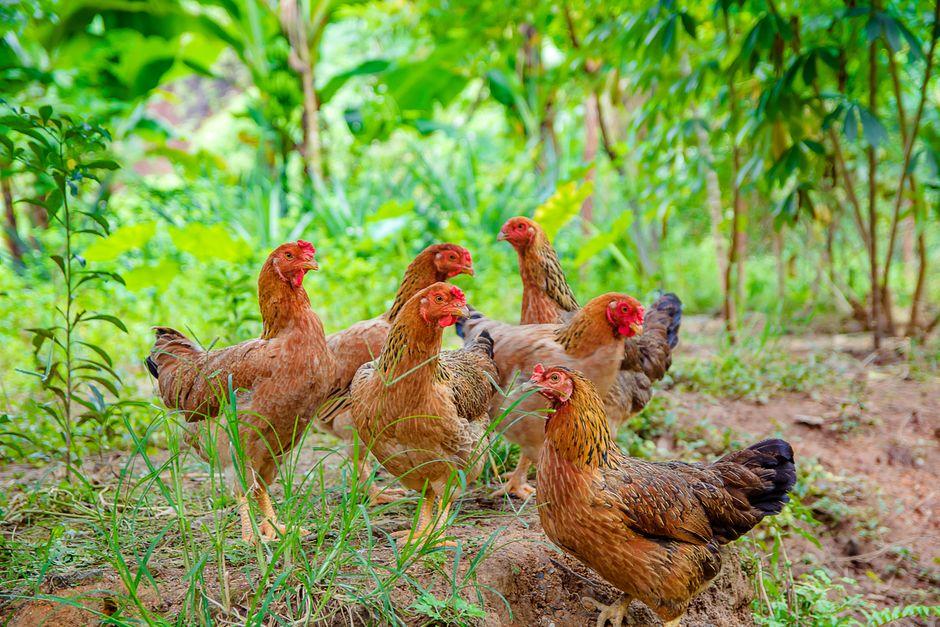
That’s the trap with free ranging. The idea is so appealing, and the chickens seem so content scratching around, that it’s easy to assume the land is doing more work than it actually is. What most people don’t realize is that even on genuinely good pasture, free range chickens in a backyard or small-scale setup almost never get everything they need from foraging alone. The supplemental feed you offer isn’t optional. It’s the foundation, with foraging as the bonus, not the other way around.
Here’s where most advice goes wrong: it treats free range feeding like a reduction problem. “They free range, so feed less.” The reality is more complicated, and getting it wrong costs you in egg production, body condition, and eventually flock health.
- Free range chickens still need 3-4 oz of quality layer feed per bird per day, even on good pasture.
- Pasture quality drops sharply after October in most climates, so seasonal feed adjustments are non-negotiable.
- Protein is the most likely deficiency: forage rarely delivers enough to sustain peak lay.
- A 16-18% protein layer feed is the minimum; bump to 20% during molt or heavy lay cycles.
- Mineral supplementation (oyster shell, free choice) remains necessary regardless of how much they forage.
What Foraging Actually Provides (And What It Doesn’t)
A healthy, well-maintained quarter-acre pasture can realistically supply somewhere between 20-30% of a hen’s daily caloric needs in peak summer months. That’s based on USDA pasture productivity estimates and roughly matches what I’ve observed weighing feeders before and after pasture access on my own property. A reader named Deanna from western Tennessee emailed me last spring and tracked her feeder consumption obsessively over 14 weeks. On her half-acre with six hens, pasture access dropped feed consumption by about 22% in June and July. By September, it was back to baseline. The pasture looked green but the productive forage, the insects and seed heads, was largely gone.
What chickens actually pick up from good pasture: insects (protein), grass and clover (some vitamins, fiber), seeds (carbohydrates, some fat), grit (naturally, which is genuinely useful), and worms (excellent protein, especially after rain). What pasture almost never supplies enough of: consistent protein at laying levels, calcium for shell formation, vitamin D3 in meaningful amounts, and sodium.
I thought for years that a chicken scratching through leaf litter was getting fed. She’s getting entertained. There’s a difference.
The Feed Math
Here’s a comparison that actually helps you plan:
| Scenario | Daily feed per hen | Estimated forage contribution | Total daily nutrition target met? |
|---|---|---|---|
| Full confinement, no access | 4 oz layer pellet | 0% | Yes, if feed is complete |
| Part-time pasture, 2-4 hrs/day | 3.5 oz layer pellet | 10-15% | Yes, if feed quality is solid |
| Full day free range, spring/summer peak | 2.8-3.2 oz layer pellet | 20-30% | Usually, with oyster shell offered free choice |
| Full day free range, fall/winter | 3.5-4 oz layer pellet | 5-10% | Only if you increase feed and watch body condition |
| Intensive managed rotational pasture | 2.5-3 oz layer pellet | 30-40% | Yes, this is the gold standard setup |
(As of August 2026, a 50 lb bag of quality 16% layer pellets runs about $22-28 depending on brand and region. Purina Layena, Scratch and Peck Feeds Organic Layer, and Producer’s Pride are three I’ve personally bought and compared. Scratch and Peck costs more, but in my experience the hens’ feather quality shows it.)
The thing no one mentions: hens will self-regulate feed intake pretty well IF the feed is available freely. Restricted access to feeders is where problems start. I’ve seen people pull feeders at noon thinking the flock will just “graze more.” What actually happens is a feeding frenzy at morning fill-up, gorging on scratch instead of balanced feed, and a slow drop in production over four to six weeks. Not dramatic enough to alarm you, just enough to cost you eggs.
Protein: The Number That Actually Matters
Is My Chicken Sick? How to Treat Chickens Naturally · Nature's Always Right on YouTube
Standard layer feed is formulated at 16% crude protein. For free range hens, I’d argue 18% is your real baseline, and 20% during molt is not overkill. The reason is simple: foraging is energetically expensive. A hen covering an acre a day is burning significantly more calories than one in a run, and she’s not necessarily replacing them with protein-rich bugs. In July she might be. In November, almost certainly not.
During my flock’s annual molt last fall, I switched to Purina Flock Raiser (20% protein) for six weeks and added free-choice oyster shell separately since Flock Raiser isn’t formulated for laying calcium levels. The molt finished faster than any previous year, about 5 weeks versus 7-8, and feather quality coming back in was noticeably better. Could be the protein, could be other factors. I don’t have a controlled study. But it’s what I do now.
One specific thing only an experienced keeper would know: when your hens start pulling feathers or pecking each other in a free range setting, the knee-jerk response is “they’re bored.” Sometimes. But protein deficiency looks exactly like boredom-driven pecking and is far more common in free range flocks than people think. Check protein intake before you start adding distractions.
Scratch, Treats, and the Calories Problem
Scratch grains are not feed. I will die on this hill.
A lot of backyard keepers see their free range flock scratching happily and decide to encourage it with handfuls of cracked corn and scratch mix. What you’re doing is displacing balanced nutrition with empty carbohydrates. A hen’s crop only holds so much. Fill it with scratch at 3pm and she’s not going back to the layer feeder before roosting.
Treats should stay under 10% of total daily intake. That’s not my rule, that’s basic poultry nutrition math. For a 4-pound hen eating roughly 3.5 oz of feed per day, 10% is about 1.4 oz of treats. That’s less than a small handful of scratch. Not a scoop, a handful.
Scenario: A small flock keeper in suburban Ohio with 8 hens, giving two cups of scratch daily to their free range birds, noticed production dropped from 6-7 eggs per day to 3-4 over two months. She cut scratch to one small handful in the morning, kept layer pellets available free choice all day, and added black soldier fly larvae (about 1 tbsp per hen, 3x weekly for extra protein). Production recovered to 5-6 daily within three weeks. Not magic, just math.
Seasonal Adjustments, Because the Internet Never Talks About This
You need to think about your feeding program the way you think about your own grocery budget: it changes based on what’s available. In June, your hens are probably fine on a slightly reduced feed ration if pasture is genuinely good. In December, they need more feed than a confined hen because they’re burning calories staying warm AND foraging is contributing almost nothing.
I adjust three times a year. Late October: increase feeder quantity, switch to 18% protein if I’m not already there. Late March: ease back slightly, watch body condition. August: watch for heat stress suppressing appetite and dropping intake below what they actually need, sometimes offer feed in the cooler morning hours only.
One detail that’ll save you frustration: keep feeders under cover. Free range hens range. If the feeder is out in the open, it gets rained on, molded, and sometimes ignored. A covered feeder, even just a roof of corrugated plastic, keeps feed fresh and gives nervous hens a safe spot to eat without watching the sky for hawks. I use the Little Giant galvanized hanging feeders and mount them inside the coop, so the birds have to come back to feed. Forces some check-ins during the day.
Minerals and Water
Oyster shell, free choice, always. This is non-negotiable regardless of what or how they forage. Free range hens eating bugs and greens are not getting sufficient calcium for daily shell formation. Eggshell quality is your early warning system here: soft shells, thin shells, or eggs with rough patches tell you calcium is running short before you see other health issues.
Grit is usually less of a problem for true free rangers since they pick up small stones naturally. But I still offer it free choice, especially for younger birds that haven’t had time to build a reservoir in their gizzard.
Water is where I’ve seen more free range flocks fail than almost anywhere else. People assume birds ranging a property will find water. Sometimes they will. Sometimes they’ll drink from a muddy puddle full of coccidian oocysts and you’ll be treating an outbreak by the following week. Fresh, clean water in a fixed location, checked twice daily in summer, is not something pasture access replaces.
Sources
- USDA Agricultural Research Service, Poultry Nutrition Guidelines: Protein and mineral requirements for laying hens by production stage.
- Damerow, Gail. “Storey’s Guide to Raising Chickens” (4th ed., 2017): Comprehensive reference on layer nutrition, free range management, and seasonal adjustments. (Available on Amazon, affiliate link.)
- Penn State Extension, “Feeding Poultry for Small and Backyard Flocks”: Practical protein and energy requirements for backyard laying hens.
- Poultry Science Association, “Nutrient Requirements of Poultry” (NRC standards): Standard reference for minimum amino acid, mineral, and vitamin requirements.
- Hemenway, Toby. “Gaia’s Garden” (2009): Pasture productivity estimates relevant to integrated backyard systems.
Photo: Erwin Bosman via Pexels