 Dr. Tom Henderson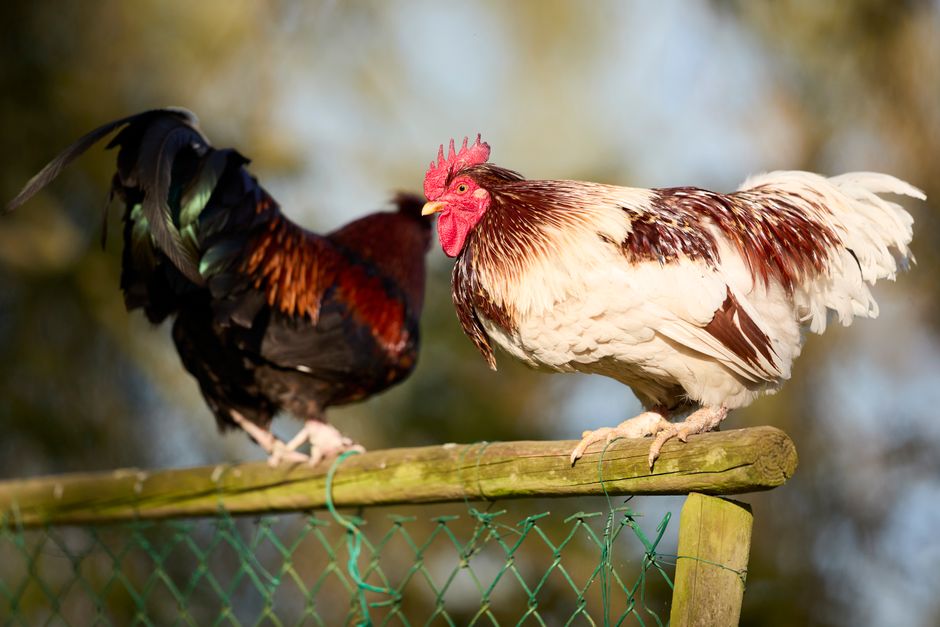
Most people buy electric fence for chickens after something bad has already happened. A neighbor lost half their flock to a fox last spring. You watched a raccoon squeeze through your hardware cloth. Something got under your coop door at night, and now you’re reading everything you can find. I’ve been there. The first time I lost birds to a predator, I spent three sleepless nights on forums and YouTube, and what I found was a lot of conflicting, vague advice. So let me give you the specific, practical version.
Electric fencing is, honestly, the single most effective predator deterrent you can run around a chicken yard. Not hardware cloth. Not a locked coop door. Not a guard dog, though a good LGD comes close. A properly energized electric fence will turn away foxes, raccoons, opossums, skunks, dogs, coyotes, and even bears. I’ve watched a German Shepherd hit a two-strand fence at the base of my run and leave without ever coming back. That dog had been testing my setup for weeks.
The catch is that “electric fence” covers everything from a $38 battery energizer with a single strand of wire to a $400 solar-powered unit running a multi-strand polytape system. They are not the same. What works depends on what you’re trying to stop, how large your yard is, and whether you want something permanent or portable.
- A 0.7-joule or larger energizer is the minimum for serious predator deterrence around a chicken yard.
- Netting-style electric fence (like Premier 1's PoultryNet) is the fastest setup for portable or rotational ranging.
- Ground contact is the #1 failure point: wet soil conducts; dry sandy soil often does not.
- Check voltage weekly; anything below 4,000 volts on the fence line is unreliable against determined predators.
- Solar energizers work well in most climates but need a backup plan for consecutive cloudy days in winter.
The Energizer Is Everything
I see people spend $300 on fancy polytape and then pair it with a bargain-bin plug-in energizer rated at 0.1 joules. That’s backwards. The energizer is the heart of the system, and if it’s undersized, nothing else matters.
For a backyard chicken run up to about 500 feet of fence perimeter, you want a minimum of 0.5 joules of stored energy, and I’d push you toward 0.7 or 1.0 joules to account for vegetation contact and wire resistance losses. For anything larger, or if you’re dealing with bears (and if you’ve ever had a bear break into a coop, you know they’re a different problem entirely), go to 2.0 joules or more.
The brands I’ve actually used and trust: Gallagher, Parmak, and Premier 1. The Parmak Magnum 12 Solar runs around $190 as of July 2026 and puts out 1.0 joule, which is plenty for most backyard setups. Gallagher’s M10 (plug-in, $85 to $95) is reliable and easy to troubleshoot. I’ve had a Gallagher M10 running on the same fence for four years without issue. Premier 1’s energizers are good but tend to be priced for the commercial market, around $250 and up for their solar units.
One thing nobody warns you about: plug-in energizers lose all function during a power outage, which, depending on where you live, might be exactly when weather-stressed predators are pushing hardest. Something to think about.
Fence Types Compared
Here’s where the decision actually branches. You’ve got four real options for backyard poultry:
Electric netting (polywire mesh, like Premier 1’s 42-inch PoultryNet at around $83 for 100 feet) is my first recommendation for most backyard keepers. It’s portable, goes up in 20 minutes once you’ve practiced, and the mesh itself physically blocks birds from crossing rather than just shocking them. The weak point is that vegetation touching the netting will drain voltage fast. You need to mow underneath it or it shorts out constantly.
Multi-strand wire on permanent posts is the better choice for a fixed, year-round run. Three to five strands at heights of 6 inches, 12 inches, 24 inches, and 36 inches will stop virtually everything except a very determined bear. The spacing matters because raccoons probe low and coyotes probe high. I’ve seen single-strand setups at 12 inches fail repeatedly against raccoons that simply went over or under.
Polytape is wide, visible, and good for horses, but it’s genuinely overkill for chickens and tends to catch more wind resistance on corner posts.
Single-strand wire as a supplemental barrier around the base of an existing fence can be very effective and cheap. One strand of 17-gauge steel wire at 4 to 6 inches off the ground, energized, stops diggers. I’ve used this as a retrofit around a chain-link run and it ended my predator problems for under $40 total.
| Fence Type | Best Use Case | Setup Time | Portable? | Approx. Cost (100 ft) |
|---|---|---|---|---|
| Electric netting | Free-range rotation, quick setups | 20-30 min | Yes | $83-$95 |
| Multi-strand wire | Permanent fixed runs | 2-4 hours | No | $40-$60 |
| Single-strand wire | Supplemental base barrier | 45 min | Somewhat | $18-$28 |
| Polytape | Visible perimeter, large animals | 1-2 hours | Somewhat | $55-$70 |
Grounding: The Part Nobody Talks About Until It’s Too Late
10 Chicken Coop Mistakes you DON'T want to Make ! · Carolina Coops® on YouTube
I made this mistake myself in my second year of keeping chickens. I had a 1.0-joule energizer running what looked like a solid fence, and my voltage meter was reading only 2,800 volts at the far end. Everything looked fine. The problem was my ground rod: one 2-foot metal stake pushed barely 18 inches into dry Georgia clay in August.
The rule of thumb from Gallagher’s own installation guides is three feet of ground rod for every joule of energizer output, with a minimum of three ground rods total, spaced 10 feet apart. For a 1.0-joule unit, that means at least three 3-foot galvanized ground rods driven completely into moist soil. If your soil is sandy or you’re in a dry climate, double that.
Check your fence voltage weekly with a digital volt meter. A good meter like the Gallagher DVM20 (around $38) takes 30 seconds and tells you instantly if something’s wrong. Anything below 4,000 volts on the line means you have a grounding problem, a short from vegetation, or an energizer issue. Don’t assume it’s working because the energizer is clicking.
A reader from central Texas emailed me in May 2026 after losing three hens to a coyote despite having an electric fence running. When she tested voltage with a meter for the first time, she got 1,400 volts on the line. The system had been running for eight months and nobody had ever checked. Two additional ground rods and some weed trimming under the fence brought it to 6,200 volts. No losses since.
Making It Work Practically (Step by Step)
For a first-time install on a permanent run, here’s what I’d actually do:
First, plan your perimeter and calculate the total footage. Add 20% for corners and gate runs. Order your energizer first, before the wire, because the energizer determines everything downstream.
Sink your corner posts first, wooden or fiberglass T-posts both work, then run your line posts every 10 to 15 feet. For multi-strand wire, use insulators rated for your wire type. Don’t cheap out on insulators; broken or cracked plastic insulators cause phantom shorts that take hours to find.
Run your ground system before you run a single strand of fence wire. Test ground resistance if you have a meter. Drive your rods, connect them to the energizer’s ground terminal with insulated lead-out cable, not bare wire lying on the soil.
String your wire from lowest strand to highest. The lowest strand should be 4 to 6 inches above ground. Tension is important: loose wire sags into vegetation. Use in-line strainers at corner posts to maintain tension as the wire heats and cools seasonally.
Connect the fence wire to the energizer’s “fence” terminal. Power it up. Test voltage at the energizer terminal (should read near full output) and then at the far corner of the fence. Any drop over 1,000 volts between those two points means you have a short somewhere on the line.
Worked example: A 12x24-foot permanent run in Wisconsin, two dogs in the neighborhood, woodchucks digging at the base. Four-strand wire fence, Parmak Magnum 12 Solar, three 4-foot ground rods. Cost: $247 in materials, 3.5 hours to install. Voltage at far corner: 5,800 volts. Zero predator penetrations in 18 months.
Second example: Portable 100-foot Premier 1 PoultryNet section for rotational ranging, 12 hens on half an acre, one fox seen on trail cam weekly. Cost: $83 for netting plus $90 for a Gallagher battery energizer. Result: fox appeared on camera twice at the fence edge and turned away both times. Mowing under the netting every 10 days is non-negotiable.
Sources
- Premier 1 Supplies (premier1supplies.com): Product specifications, installation guides, and energizer output charts for poultry electric netting systems
- Gallagher North America Technical Support Documentation: Energizer joule ratings, grounding requirements, and fence voltage testing standards
- University of Minnesota Extension, Predator Management for Small Flocks: Research-based recommendations on predator types, fence height requirements, and voltage thresholds by predator species
- Parmak Fence Charger Specifications and Manuals, Parker McCrory Manufacturing: Solar and plug-in energizer output specifications and installation recommendations
- Kencove Farm Fence Supplies, Electric Fence Calculator and Design Resources: Joule and voltage requirements by animal type, fence design planning tools
Photo: Erwin Bosman via Pexels