 Carol Thompson
The egg aisle is normal again. Prices that hit a jaw-dropping $6.23 per dozen in March 2025, the highest in twenty years according to Bureau of Labor Statistics data, have crashed back to $2.19 by May 2026 as avian influenza pressure eased and commercial flocks rebuilt. By any rational financial calculation, the case for keeping backyard chickens just evaporated. And yet: 11 million U.S. households now keep flocks, nearly double the 5.8 million in 2018, making chickens the third most common pet in America. The American Pet Products Association confirmed those numbers in June 2026, and Google search traffic for “backyard chickens” is still climbing. Something fundamental has shifted, and it isn’t the price of feed.
The Math Has Never Worked, But Now We’re Admitting It
| Metric | 2018 | 2025 | 2026 |
|---|---|---|---|
| U.S. Households Keeping Chickens | 5.8 million | - | 11 million |
| Egg Price (per dozen) | - | $6.23 (March peak) | $2.19 (May) |
| Years of Price Peak | - | Highest in 20 years | - |
| Silkie Annual Egg Production | - | ~100 eggs | - |
| Production Red Sex-Link Annual Egg Production | - | 280-300 eggs | - |
| Standard Coop Space Recommendation | - | 4 sq ft/bird (minimum) | - |
| Improved Coop Space (pet-kept flocks) | - | 6-8 sq ft/bird | - |
| University of Winchester Survey: Hens as Moral Equals to Dogs | - | - | 75%+ of owners |
| University of Winchester Survey: Would Never Slaughter Flock | - | - | 90%+ of owners |
I’ll be honest: the economics of backyard egg production were always questionable. Even when eggs were $6 a dozen, anyone who actually ran the numbers, quality feed, coop costs, bedding, veterinary care, the occasional predator-proofing upgrade after a raccoon finds the weakness in your hardware cloth, knew the payback period was painful. Texas A&M AgriLife Extension livestock economist David Anderson confirmed in July 2026 that with commercial flock recovery well underway, home egg production is even harder to justify on a spreadsheet now.
What surprised me was how openly people are saying so and keeping chickens anyway. The justification has just changed. “I save money on eggs” has been quietly retired. In its place: enrichment, companionship, food transparency, and what a lot of keepers are calling a lifestyle choice rather than a financial one.
Chickens as Companion Animals: This Isn’t Fringe Anymore
The University of Winchester surveyed over 2,000 chicken owners and found that more than 90% would never slaughter their flock for consumption, and over 75% do not consider their chickens morally less important than dogs. Read that again. Three-quarters of backyard flock owners are operating with an ethical framework that places their hens on par with the family dog. That’s not a hobby farmer mindset. That’s a pet owner mindset.
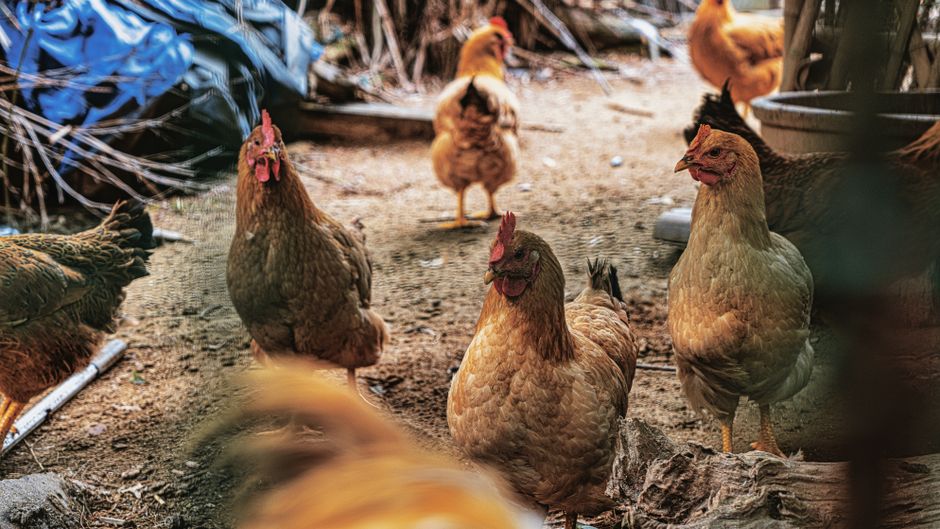
And it’s reshaping everything downstream: breed selection, coop design, enrichment, and especially veterinary care. People are now choosing breeds like Silkies, Orpingtons, and Easter Eggers not because of egg production metrics but because of temperament and handleability. Silkies produce maybe 100 eggs a year if you’re lucky. A production Red Sex-Link can push 280 to 300. The fact that Silkie ownership is surging tells you exactly where the culture has moved.
The backyard chicken community has also started pushing back against the word “livestock” when applied to pets. That’s a meaningful semantic battle. Once your hen has a name, a vet record, and a birthday party on Instagram, the psychological framework has completely changed.
What the USDA Label Shift Actually Means for Backyard Keepers
Here’s a development that doesn’t get enough attention. New USDA “Product of USA” labeling rules took full enforcement effect on January 1, 2026. Previously, a chicken could be born in Thailand, raised in Canada, and processed in a U.S. facility and still wear a “Product of USA” label. The new standard requires the bird to be born, raised, slaughtered, and processed entirely in the United States.
For backyard keepers, this is interesting for a couple of reasons. First, it validates exactly what they’ve been doing all along: full chain-of-custody transparency from hatch to plate, or in most cases now, hatch to retirement. Second, it puts commercial poultry under a new transparency burden that backyard flocks have always naturally met. The 2026 USDA poultry rule changes don’t apply directly to personal flocks, but they signal a broader cultural appetite for knowing exactly where food comes from. Backyard keepers have been living that value for years.
Whether this creates any real commercial incentive for home production is another question. At $2.19 a dozen at the store, the sourcing anxiety that drove some people to build coops in 2025 has settled down. But for the people who genuinely care about the welfare conditions behind their food, those concerns don’t disappear just because prices do.
How Coop Design and Enrichment Are Evolving
Walk through any online backyard chicken forum right now and the conversations have shifted. Five years ago the dominant questions were about production: which breeds lay the most, how do I extend laying through winter with supplemental light, what’s the cheapest feed with the best conversion ratio. Now the dominant questions are about welfare and enrichment: is my coop big enough for my specific birds’ personalities, what substrates do chickens actually prefer for dust bathing, how do I set up perches to reduce flock aggression in a small space.
This matters practically. The standard industry guidance of 4 square feet of coop space per bird was always a minimum, and a bad one. For birds that are genuinely kept as pets, with the expectation that they’ll live 7 to 10 years rather than the commercial 18-month cycle, that number is inadequate. I’ve run flocks on 6 to 8 square feet per bird and seen measurable differences in feather condition and social stress, especially in winter when outdoor time drops.
The enrichment piece is newer territory. Scatter feeding, perch variety, visual barriers to reduce pecking order stress, these aren’t concepts that came from production agriculture. They came from the exotic bird and zoo communities, and they’re filtering into backyard chicken keeping as the pet framing takes hold.
The Identity Has Changed, and That Changes Everything
As Yahoo Lifestyle reported in July 2026, people aren’t stopping despite the financial logic falling apart, because the financial logic was never really the point for most of them, even when they thought it was. The price spike in 2025 gave people permission to act on something they already wanted to do. Now that prices have normalized, the people who stayed did so because they’d already made the identity shift.
Eleven million households keeping chickens as the third most common American pet is a genuinely new social phenomenon. It has real implications for urban zoning policy, for avian veterinary medicine (which is scrambling to meet demand), for feed industry product development, and for how we think about the human-animal bond. The bird flu price spike of 2025 will look, in retrospect, like a catalyst that accelerated something that was already happening.
The chickens won. They’re pets now.
Sources
- Raising backyard chickens won’t guarantee you a profit. Here’s why that’s not stopping anyone in 2026 (July 1, 2026)
- The Unexpected Rise in Popularity of Pet Chickens (June 12, 2026)
- Backyard Chickens: Poultry, Pets, or Something In Between? (January 30, 2024)
- 2026 USDA Poultry Rule Changes (May 27, 2026)
Photo: Julien GAROT via Pexels