 Sarah Mills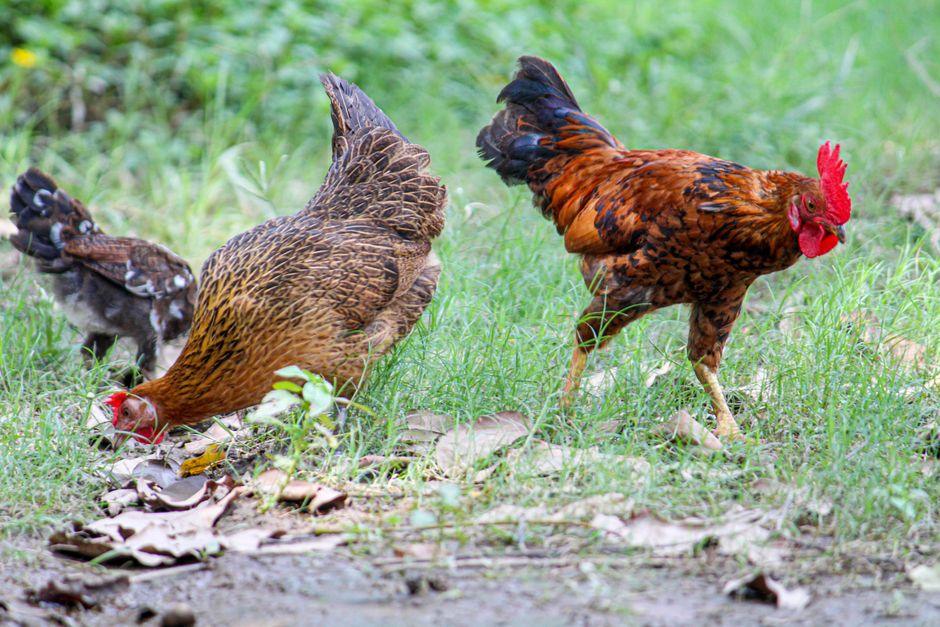
Most chicken-and-garden advice boils down to “let your hens roam free and watch the magic happen.” That advice will cost you your tomatoes, your lettuce, your newly planted perennials, and probably a few things you forgot you even cared about until they were gone. I learned this the hard way in my second year of keeping chickens, when I let a small flock of Australorps into my vegetable beds for “supervised scratching” and came back inside to get coffee. Ten minutes. My entire row of Swiss chard was shredded.
Chickens and gardens can genuinely work together. The key is accepting that chickens are not gentle helpers. They’re miniature rototillers with beaks. Your job is to set up the system so their destructive tendencies land exactly where you want them.
The core logic: rotation, not cohabitation
The mistake most people make is treating this as a spatial problem. They build a pen, they have a garden, and they try to figure out how much overlap is acceptable. That framing is wrong. The right way to think about it is temporal.
Chickens do their best garden work before you plant and after you harvest. During those windows, they’re assets. They scratch up compacted soil, eat weed seeds, hunt grubs and larvae, and deposit nitrogen-rich manure. While crops are actively growing, they’re a liability. They’ll eat seedlings, dust-bathe in your amended soil, and strip leaves off anything within reach.
Rotational grazing for chickens works exactly like it does for larger livestock: divide the space, rotate the animals through, give each section recovery time. In practice, this means you want movable infrastructure rather than permanent runs. A chicken tractor or a portable electric net fence (Premier 1 makes a reliable 164-foot poultry net that runs around $170) lets you park the flock on a section of garden bed before you plant, let them work it for a week or two, then move them out. By the time you’re ready to transplant, that bed is scratched, fertilized, and cleared of a surprising percentage of surface-crawling pests.
I run three main garden sections on a rough seasonal rotation with my six-hen flock of Dominiques. Spring prep: hens go into the previous year’s squash bed in late March while it’s still empty. They spend two weeks cleaning up overwintered debris and working in the last of my compost. I plant that bed by mid-April, and the hens are nowhere near it until fall.
Choosing the right breeds actually matters here
| Breed Type | Scratch Intensity | Calm Temperament | Garden Suitability | Pest Hunting | Notes |
|---|---|---|---|---|---|
| Leghorns (Mediterranean) | Very High | Low | Poor | Excellent | Aggressive, work soil to bare dirt, may breach barriers |
| Sussex (Dual-Purpose) | Moderate | High | Excellent | Good | Calm, forage well, reliable layers |
| Plymouth Rocks (Dual-Purpose) | Moderate | High | Excellent | Good | Calm, easier to redirect, reliable layers |
| Orpingtons (Dual-Purpose) | Moderate | High | Good | Good | Calmer than Mediterranean breeds, scratch less frantically |
| Bantams | Moderate | Moderate | Fair | Poor | Small footprint but less effective at hunting larger grubs |
| Australorps (Heavy Breed) | Low | High | Good | Good | Heavy, rarely fly, useful for grub suppression |
Lighter Mediterranean breeds, Leghorns especially, are aggressive and relentless scratchers. They’ll work a bed down to bare dirt in ways that heavier breeds won’t. That’s useful if you want deep soil disturbance. It’s catastrophic if they get into a bed you care about.
Heavier dual-purpose breeds, your Orpingtons, Plymouth Rocks, and Sussex, are calmer and scratch less frantically. They still scratch, but they’re easier to redirect and less likely to strip a bed completely if they breach a barrier. For garden integration, I’d rank Sussex and Plymouth Rocks at the top. They’re calm, curious, forage well without going nuclear on everything, and they lay reliably through most of the year.
Bantams are popular for garden work because of their smaller footprint, but I find them less useful as pest hunters. They’re too small to do much with larger grubs or beetles. For serious pest suppression, you want a standard-size hen with a proper scratch reflex.
Physical barriers: what actually holds and what doesn’t
Chicken wire is poorly named. It keeps chickens in, but barely. A motivated hen will push through gaps, and anything under 18 inches of vertical fence is essentially decorative. For protecting individual beds or sections, I use 24-inch hardware cloth (1/2-inch mesh) bent into low hoops over raised beds. It’s rigid, it presses into the soil enough to be annoying to move, and it works. Raised bed hoops and netting systems also work well if your beds are uniform width.
For perimeter control, 4-foot welded wire with the bottom 6 inches buried or bent outward at a 90-degree angle underground stops almost everything. Chickens don’t dig under fences the way dogs do, but they will pace the edge looking for a gap, and they will find it if it exists. Check the perimeter every spring before you start rotating them near the garden.
One thing people underestimate: vertical. A hen that wants to get somewhere will fly. Australorps, heavy breeds, usually don’t bother. A Leghorn, a game bird cross, a well-motivated Easter Egger? They’ll clear a 4-foot fence without thinking about it. If flying is a problem with your flock, you’re either clipping one wing (quick, harmless, needs redoing after each molt) or you’re covering the top of the run with bird netting.
Pest suppression: what you can realistically expect
Chickens are excellent at Japanese beetle grubs. If you have a lawn adjacent to your garden and you’re dealing with grub damage, running a flock over that section in fall after the grubs have moved closer to the surface is one of the most effective things you can do. I’ve watched my hens work a patch of lawn and come up with 20+ grubs in a single afternoon session.
They’re decent on squash bugs and cucumber beetles if you introduce them to the bed early in an infestation, before population density gets out of hand. They’re poor on aphids (can’t get to them easily, and won’t bother much) and useless on anything that lives deep in plant tissue.
Slugs are probably their greatest contribution to the garden. My slug pressure dropped noticeably after I started running the flock through my strawberry beds in early spring before the plants leafed out. The hens clean up the slug eggs hiding in the debris. That one change made a real difference.
Don’t expect chickens to replace any serious pest management program. Think of them as one tool that reduces baseline pressure, not something that solves specific infestations.
Soil fertility: the part people undersell
Sources
This is actually where garden-chicken integration pays its biggest dividends, and most articles gloss over it.
Chicken manure is high in nitrogen, roughly 1.1 percent by weight, which is significantly higher than horse or cow manure. It’s also hot: fresh chicken manure applied directly to plant roots will burn them. But when it’s worked into soil two to four weeks before planting, or when it’s been composted first, it’s genuinely excellent fertility input.
Running hens through a bed for two weeks before planting, then turning the surface and waiting ten days to two weeks, gives you free soil amendment. Pair that with a thin layer of compost and you have a bed that doesn’t need much else. I stopped buying bagged fertilizer for my squash and corn beds almost entirely after I started doing this consistently. The yields from those beds are noticeably better than the beds I didn’t rotate hens through.
If you want to capture manure more efficiently, put a droppings board under your roosting bars (hens deposit most of their daily manure overnight), collect it weekly, and hot-compost it in a dedicated bin. A flock of six hens produces roughly a cubic yard of usable compost every 8 to 12 months with this method. That’s a real number worth knowing.
Photo: Jahangir Parvez via Pexels