 Sarah Mills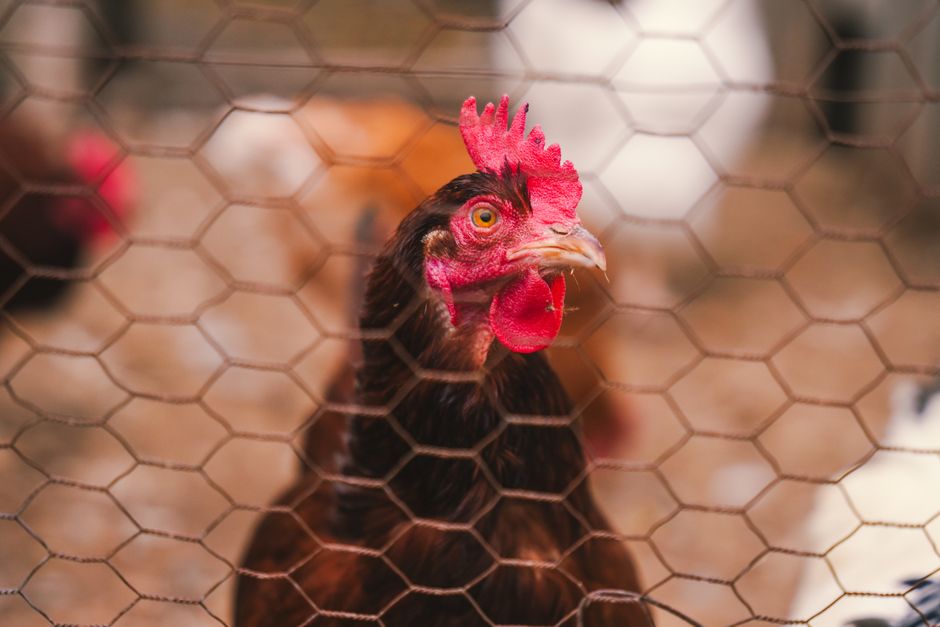
Most chicken coop reviews online are written by people who have never cleaned one in January.
That’s the cleanest way I can put it. You’ll find glowing write-ups of prefab coops from big-box stores, star ratings boosted by people who set them up in October and haven’t hit a real winter yet, and almost zero mention of the thing that will actually determine whether a coop lasts: ventilation design. Meanwhile, the detail that matters most to your hens’ respiratory health and your predator problem gets two sentences buried under a paragraph about “rustic charm.”
Here’s what I’ve learned after a decade of keeping layers in both suburban backyards and on a half-acre rural lot, through Wisconsin winters and a stretch of summers in central Texas: coop selection is the single highest-leverage decision you make as a chicken keeper. Get it wrong and you’ll spend the next three years compensating. Get it right and everything else gets easier.
- Budget under $300 for a prefab coop and you're almost certainly buying a 2-3 year replacement, not a permanent setup.
- Most prefab coops are rated for roughly twice as many hens as they can actually support (4-sq-ft minimum per bird inside, 10 outside).
- Hardware cloth (1/2-inch welded wire) stops predators; standard chicken wire does not, raccoons tear it open.
- Ventilation should equal roughly 1 square foot per bird; most sub-$500 coops provide a fraction of that.
- A well-built DIY coop runs $400-$900 in materials and will outlast any prefab under $1,000.
What the Star Ratings Aren’t Telling You
The average prefab chicken coop on Amazon or Tractor Supply carries a 4.1-to-4.3-star rating. Spend ten minutes filtering for reviews older than six months and that number drops. Owners who’ve pushed through a full year, including a real winter and a humid summer, rate the same coops considerably lower: warped wood, rusted latches, hardware cloth pulling away from frames, roofs that leak at the seams.
A 2023 survey by the National Chicken Council found that backyard flock ownership had grown to an estimated 13 million U.S. households, up sharply from 8 million in 2018. That’s a lot of first-time buyers, and the prefab coop market followed that growth with a flood of cheap product from overseas manufacturers. The markup is real: a coop that retails for $299 at Rural King often has a bill-of-materials under $60, using untreated pine that will start rotting at the joints within 18 months if it ever sees rain.
I thought thin wood was just a cosmetic issue the first time I bought a prefab. It’s not. Thin, untreated walls don’t insulate, they warp under humidity, and the gaps that open up at joints are exactly what a determined weasel needs. I lost two birds to a weasel that found a gap I hadn’t noticed. The coop was eight months old.
The Real Numbers: Space, Predators, and Ventilation
Space math on most product listings is fictional. The industry standard, supported by the University of Kentucky Cooperative Extension Service and most state ag guidelines, is 4 square feet of interior space per standard-size hen, plus 10 square feet of outdoor run per bird. A coop marketed as “holds 6-8 chickens” that has 12 square feet of interior floor space holds 3 hens comfortably. The other three will be crowded, stressed, pecking each other, and running up your vet bills.
Ventilation is the issue nobody talks about because it’s harder to photograph than a cute nesting box. The Merck Veterinary Manual recommends a minimum of 1 square foot of ventilation per bird, positioned near the roofline to allow ammonia and moisture to escape without creating a direct draft on roosting hens. Run your finger around the top of every prefab coop you’re considering: if there aren’t vent openings near the peak, you’re buying a box that will give your birds chronic respiratory disease over a wet winter.
Predator protection is where cheap coops fail hardest. Chicken wire (the hexagonal stuff) has gaps large enough for a raccoon to reach through and grab a bird. It also rusts faster than hardware cloth and can be torn by a focused coon or a persistent fox. Half-inch welded hardware cloth is what you need on every opening. A 2022 analysis from the Livestock Conservancy found that over 60% of reported backyard flock losses were attributed to predators, with raccoons and domestic dogs accounting for the majority. If your coop uses chicken wire, that’s your next purchase: replace it.
Prefab vs. DIY vs. Repurposed: What You’re Actually Choosing Between
Let me put the main options side by side. Prices are current as of July 2026, based on manufacturer listings, Amazon, Tractor Supply, and Home Depot.
| Option | Upfront Cost | Expected Lifespan | Space (typical) | Predator Security | Best For |
|---|---|---|---|---|---|
| Cheap prefab (import brand) | $150-$350 | 2-4 years | 2-6 hens (overcrowded) | Poor (chicken wire, weak latches) | Testing before committing |
| Mid-range prefab (Omlet, Ware Mfg.) | $400-$900 | 5-8 years | 4-8 hens | Fair to good | Suburbanites with limited build skills |
| High-end prefab (Omlet Eglu Cube, Precision Pet) | $900-$1,800 | 8-15 years | 6-10 hens | Good | People who want set-it-and-forget-it |
| DIY build (from plans) | $400-$950 (materials) | 15-25+ years | Fully customizable | Excellent (if built right) | Anyone handy enough to run a drill |
| Repurposed structure (shed, playhouse) | $0-$400 in modifications | 10-20+ years | Highly variable | Variable | Rural properties with existing outbuildings |
The Omlet Eglu Cube gets a lot of buzz, and honestly it deserves some of it. The double-wall insulated plastic doesn’t warp, the latches are raccoon-tested (Omlet claims raccoon resistance and in my testing, they hold), and cleaning takes about four minutes. At around $895 for the coop without a run, it’s not cheap, but it’s the only prefab I’d describe as genuinely durable for a 4-to-6 hen flock.
For DIY, Ana White’s free coop plans at ana-white.com remain the best starting point I’ve found. Clear cut lists, real dimensions, no fluff. Budget roughly $600-$700 in lumber and hardware if you’re building for six standard hens and using pressure-treated base boards.
A worked example: A reader named Diane in suburban Portland started with a $279 prefab from Costco for four Buff Orpingtons. By month 18, two roofing panels had warped, a latch had rusted shut (she had to use bolt cutters), and she was patching gaps with spray foam every few weeks. She converted a salvaged garden shed for about $320 in modifications: hardware cloth on every opening, two hinged vent panels near the roofline, a new latch set from Amazon. Her girls have been in it for three years without incident. Total spent: $599 across both solutions. A $600 DIY build from the start would have done the same job.
Breeds, Coop Size, and the Decisions That Compound
This is where I see people double their problems. They buy a coop for four birds, then add four more because they caught chicken math, and suddenly they have eight hens in a space rated for four (which actually held two comfortably). The crowding causes pecking, feather loss, and eventually disease.
Before you buy any coop, know your target flock size and double it. You will get more chickens. Buy for the flock you’ll have in three years, not the flock you have today.
Breed size matters more than most reviews mention. Standard-size hens (Rhode Island Reds, Plymouth Rocks, Australorps) need that 4-square-foot interior minimum. Bantams can manage on 2 square feet. Large breeds like Buff Brahmas and Jersey Giants want 5-6 square feet per bird, and they’re heavy enough that low roost bars become a bumblefoot risk because of the impact force when they land.
Worked example: When I switched from four standard hens to a mixed flock of six (two Jersey Giants, four Australorps), my 48-square-foot coop went from comfortable to borderline crowded. I added a 12-square-foot lean-to extension for $140 in lumber and hardware cloth. Pecking stopped within two weeks. That’s the cheapest behavioral intervention I’ve ever made.
What to Actually Inspect Before You Buy
If you’re buying a prefab in person (Tractor Supply, Rural King, local farm stores), bring a flashlight and check these specific things:
First, the corner joints. If they’re stapled rather than screwed, plan on them failing. Second, every latch: try to open it with your thumb alone, then imagine a raccoon with actual dexterity. Third, the roof overhang. A coop with less than 6 inches of overhang will have water running down the walls and into the litter. Fourth, the ventilation openings near the roof peak. If there aren’t any, that’s a dealbreaker or a modification project. Fifth, look for any wire mesh and check the gauge. Hardware cloth feels stiff and has a welded grid; chicken wire feels flimsy and has a twisted hexagonal pattern. If you can push your finger through a gap in the mesh, a weasel can push its head through.
Worked example: A flock owner in suburban Chicago bought a $349 coop with a latch that defeated a raccoon through sheer clunkiness. Not because it was secure, but because the raccoon couldn’t figure out the weird angle required. Two months later, a smarter raccoon in the neighborhood worked it out and killed three birds. Latch security isn’t accidental. It requires a mechanism the animal can’t reverse: a two-step carabiner clip, a bolt latch with a vertical drop pin, or a padlock. Spend $12 on a quality latch and don’t rely on luck.
Sources
- National Chicken Council Backyard Flock Survey (2023): Estimated 13 million U.S. households keeping backyard flocks as of 2023, up from 8 million in 2018.
- University of Kentucky Cooperative Extension Service, “Poultry Housing”: Minimum space guidelines for backyard laying hens: 4 sq ft interior, 10 sq ft outdoor run per bird.
- The Livestock Conservancy, Predator Loss Report (2022): Analysis of predator types responsible for reported backyard poultry losses.
- Merck Veterinary Manual, Poultry Ventilation Standards: Recommends minimum 1 sq ft of ventilation per bird, positioned at roofline to prevent respiratory disease.
- USDA National Agricultural Statistics Service, Poultry Production Data (2025): Background data on small-flock poultry trends and housing mortality factors.
Photo: Emma Cate via Pexels