 Mike Carter
Barred Rocks are the chicken that converted me. I was a skeptical new keeper in 2015, convinced I wanted something exotic, something with personality and flair. A neighbor handed me three Barred Rock pullets almost apologetically, like she was giving me the basic option. Those three birds outlaid, outperformed, and outlasted every “interesting” breed I brought in over the next four years. So yes, I’m biased. But I’m biased because the data earned it.
You might be wondering if Barred Rocks are just the vanilla choice, the safe pick for beginners who don’t know better. Here’s what I tell people: vanilla is underrated, and so are Barred Rocks. They’re one of the most thoroughly road-tested dual-purpose breeds in North America, and if you’re building a flock that actually produces, they belong in the conversation.
What You’re Actually Getting
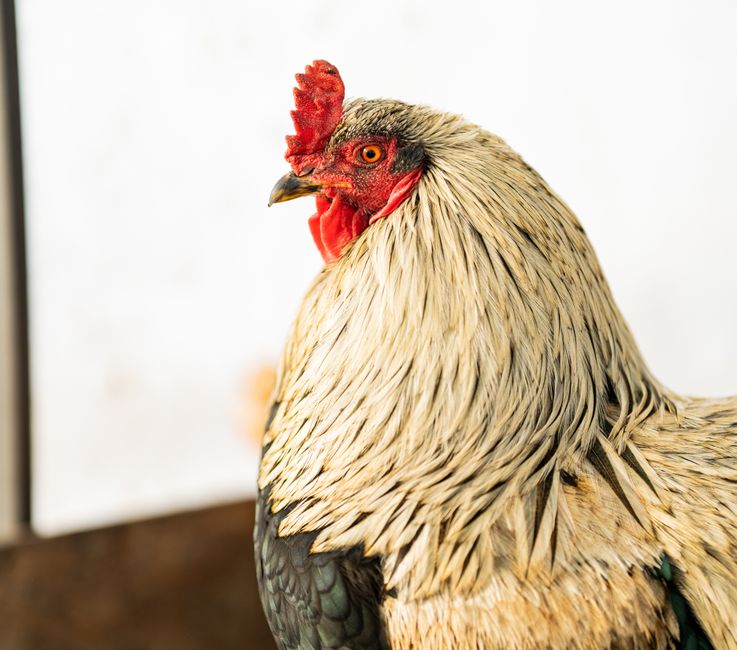
The Barred Plymouth Rock, to use its full name, is an American breed developed in the mid-1800s, recognized by the American Poultry Association in 1874. The barred pattern (those sharp black-and-white horizontal stripes) is instantly recognizable, and it’s not just cosmetic: the barring gene is sex-linked, which means day-old chicks can be sexed by color. Males tend to have a lighter, more washed-out head spot at hatch; females have a darker, more defined one. It’s not foolproof, but it’s better than guessing with a lot of breeds.
Size-wise, you’re looking at a large, well-built bird. Hens typically run 6.5 to 7.5 pounds; roosters can hit 9 pounds or more. The body is broad and deep, with a single comb, yellow legs, and a calm, grounded stance that reads as competent somehow. They don’t spook easily. You can walk into a run with Barred Rocks and they’ll come investigate rather than scatter.
Temperament is where I need to be honest with you, because there’s a wide spectrum here. Hatchery-sourced Barred Rocks can be perfectly fine but a little generic in personality. Birds from heritage breeders who’ve been selecting for temperament over decades? Often noticeably friendlier, calmer, more interactive. The difference isn’t subtle. If you can, find a local breeder rather than ordering day-olds from a large commercial hatchery.
Egg Production: The Real Numbers
| Metric | Barred Rock | Easter Egger | White Leghorn |
|---|---|---|---|
| Eggs per week (peak) | 4-5 | ~3-4 | 5-6+ |
| Eggs per year (peak) | 200-280 | ~150-200 | 300+ |
| Hen weight | 6.5-7.5 lbs | 5-6 lbs | 4-5 lbs |
| Rooster weight | 9+ lbs | 6-7 lbs | 5-6 lbs |
| Feed per bird per day | 0.35-0.4 lbs | ~0.25 lbs | ~0.2 lbs |
| Dressed cockerel weight (16-20 weeks) | 4-5.5 lbs | 2.5-3.5 lbs | 2-3 lbs |
| Peak production window | Months 5-24 | Months 5-20 | Months 5-18 |
| Cold tolerance | Excellent | Moderate | Moderate |
Here’s something that surprises people. Barred Rocks from a quality line will lay 4 to 5 large brown eggs per week during their prime, which works out to roughly 200 to 280 eggs per year. That’s competitive with production breeds. They don’t match a White Leghorn for sheer volume (those birds can hit 300+), but they do it while being twice as calm and, honestly, way more pleasant to keep.
The peak production window is roughly months 5 through 24 of life. After that, you’ll see a gradual taper, but many keepers report solid production through year three or four. My oldest Barred Rock hen (I called her Gravel) laid consistently through her third full laying season before slowing down, which I wasn’t expecting.
One practical note: Barred Rocks are dual-purpose birds, meaning cockerels have enough meat on them to be worth processing. I’ve processed extra males at 16 to 20 weeks and gotten dressed weights in the 4 to 5.5 pound range. Not a Cornish Cross by any stretch, but a real table bird.
Feeding, Health, and the Things Nobody Warns You About
3 BEST CHICKEN BREEDS | Backyard & Family Flocks | Favorite Poultry Varieties For Beginners | Chicks · Oak Abode on YouTube
A standard 16% layer pellet works fine once your hens are in production. Before that, keep them on a chick starter (18 to 20% protein) through week 16 or so, then transition. I use Purina Layena or Nutrena Naturewise depending on what’s priced better locally, and I haven’t noticed a meaningful difference in production between the two. Oyster shell on the side, always. Free choice, separate container. Don’t skip this.
The thing nobody warns you about with Barred Rocks: they eat. A lot. These are big birds with big appetites, and if you’re calculating feed costs based on Leghorn data, you’ll be surprised. A flock of 6 Barred Rock hens will go through feed noticeably faster than 6 production-breed hens. I’ve tracked it: my BR hens average about 0.35 to 0.4 pounds of feed per day per bird, compared to roughly 0.25 pounds for my Easter Eggers. Over a month, for six birds, that’s roughly an extra 9 pounds of feed. Not a budget-breaker, but real.
They’re also prone to getting chunky if they free-range less and the feed is always full. A fat hen is a poor layer. If your birds start looking like they’re waddling, pull back on treats and make sure they have space to move.
Health-wise, they’re genuinely hardy. Cold tolerance is excellent. That single comb is the one vulnerability in bitter cold (frostbite risk), so if you’re in northern Minnesota or Wisconsin and temps drop below 0°F regularly, apply a thin coat of petroleum jelly to the comb tips during cold snaps. I know it sounds absurd. It works.
Coop and Run Setup
Barred Rocks don’t need anything fancy, but they do need space. Don’t crowd them. The standard guidance of 4 square feet per bird inside the coop and 10 outside is a floor, not a target. These birds have real size and real social needs, and a cramped run with Barred Rocks will eventually produce feather-pecking.
Roost height matters more than people think. I’ve seen keepers put roosts at 4 to 5 feet high and then wonder why their big birds have keel injuries. Barred Rocks are heavy. Keep your primary roost at 18 to 24 inches off the ground, with a lower step at 12 inches so they can get up without a big jump. I switched my flock to this setup after my second hen developed a mild keel bruise, and I haven’t seen one since.
Nesting boxes: one box per 4 to 5 hens is the typical guidance, but honestly, they’ll all want the same box anyway. That’s just chickens. Soft nesting pads make a real difference for large-bodied birds.
What to Expect Year One: A Realistic Timeline
First-time keepers get surprised by the timeline almost universally, so let me walk you through it plainly.
If you start with day-old chicks in spring (say, April in a temperate climate):
- Weeks 0 to 6: Brooder time. 95°F at chick level, dropping 5°F per week. Heat plate or heat lamp, watch for pasty butt, provide chick starter.
- Weeks 6 to 16: Pullets move outside (weather permitting), continue grower feed, no layer pellets yet. They look awkward. This is normal.
- Weeks 18 to 24: First eggs appear. Barred Rocks typically start laying around 16 to 20 weeks, which is earlier than a lot of dual-purpose breeds. First eggs will be small. They’ll grow.
- Month 6 onward: Full production. If you started with 6 pullets, expect 4 to 5 eggs per day on average through the peak season.
Concrete example from my own experience: I started 8 Barred Rock pullets from a local breeder in April 2021. By late September, I was pulling 5 to 7 eggs a day consistently. My production dropped off sharply in November as daylight shortened, then climbed back in February. That first full laying year I tracked 1,247 eggs from 8 birds, which works out to about 156 eggs per bird. That’s below theoretical max, but it’s real-world numbers from a backyard flock with natural lighting and no supplemental light.
Another scenario worth mentioning: a reader named Dana from central Ohio messaged me last spring. She’d bought 4 Barred Rock hens as started pullets from a feed store in March, put them in a 4x8 converted shed, and was disappointed with production by June. We talked through her setup. The waterer was undersized (a 3-gallon fount for 4 large hens in summer heat). She upgraded to a 5-gallon horizontal nipple waterer, gave them more shade, and production jumped from 2 eggs a day to 3 to 4 within two weeks. Hydration and heat stress were the problem, not the breed.
Are They Right for You?
If you want a flock that looks good, lays well, tolerates handling, does reasonably well in cold climates, and doesn’t require you to become a specialist, Barred Rocks are a strong answer. They’re not the best at any one thing, but they’re consistently good at almost everything.
If you’re chasing maximum egg production per bird, look at Golden Comets or ISA Browns. If you want extraordinary gentleness and lap-bird behavior, Buff Orpingtons might edge out Barred Rocks on that metric. And if you’re in a hot, humid climate like southern Texas or Florida in midsummer, lighter Mediterranean breeds handle the heat better.
But for most backyard keepers in most of the country? As of July 2026, Barred Rocks remain one of the most reliable, adaptable, and genuinely satisfying breeds you can put in a coop. I’ve kept them alongside Rhode Island Reds, Easter Eggers, Australorps, and Wyandottes. When someone asks me where to start, or where to anchor a mixed flock, I still point to Barred Rocks first.
Sources
- American Poultry Association, Standard of Perfection: Official breed standard for the Barred Plymouth Rock, including weight, color, and conformation criteria.
- University of Kentucky Extension, Poultry Production: Feed consumption and production data for backyard laying hens.
- Merck Veterinary Manual, Poultry Section: Reference for frostbite, keel bone injuries, and common laying hen health issues.
- Penn State Extension, Small Flock Production Guide: Practical guidance on coop space, nutrition transitions, and dual-purpose breed management.
Photo: FurtherMore Studio via Pexels