 Sarah Mills
Most people figure out the real cost of backyard eggs the same way: they’re standing in the feed store checkout line, staring at a $28 bag of layer pellets, doing math in their head that doesn’t add up to “cheaper than the grocery store.” Nobody warned them. Or if someone did, they said something vague like “it pays off in the long run,” which is basically the chicken-keeping version of “it builds character.”
It doesn’t pay off. Not financially. That’s what every dreamy “grow your own food” article glosses over, and I’d rather just say it plainly so you can make a real decision.
This table breaks down actual costs over three years, the typical productive lifespan of a laying flock, so you can see where the money really goes.
| Cost Category | Backyard Flock (6 hens) | Store-Bought Equivalent |
|---|---|---|
| Startup (coop, feeder, waterer, chicks) | $300-$600 | $0 |
| Feed (36 months × $22-$25/mo) | $792-$900 | $0 |
| Supplements & bedding (36 months) | $180-$360 | $0 |
| Misc. (vet supplies, repairs, electricity) | $100-$200 | $0 |
| Total 3-Year Cost | $1,372-$2,060 | $0 (eggs only below) |
| Eggs produced (3 years, accounting for seasonal decline) | ~900 dozen | - |
| Cost per dozen (backyard) | $1.52-$2.29 | - |
| Store eggs: conventional (avg $2.50/doz) | - | $2,250 for 900 doz |
| Store eggs: pasture-raised (avg $6/doz) | - | $5,400 for 900 doz |
| 3-Year Savings vs Conventional | +$190 to +$878 (backyard cheaper) | |
| 3-Year Savings vs Pasture-Raised | +$3,340 to +$4,028 (backyard much cheaper) | |
General information for comparison, confirm specifics for your situation.
What Your Eggs Actually Cost to Produce
Feed’s the biggest expense, and it’s also the one most beginners massively underestimate. A laying hen eats about a quarter pound of feed daily, which comes to roughly 1.75 pounds per week. At current prices (mid-2024, nationwide average for a 50-lb bag of Purina Layena or Nutrena NatureWise), you’re looking at $22-$28 per 50 pounds. That works out to somewhere between $0.77 and $0.98 per hen, per week.
Six hens, the standard beginner flock size, will run you $4.60 to $5.90 weekly in feed. Call it $22-$25 monthly.
A healthy hen in peak lay produces about 5 eggs per week during prime season. Six hens give you roughly 30 eggs weekly, maybe 2.5 dozen. Your feed cost per dozen is already running $8-$10 before you even factor in anything else.
Then there’s everything else. Oyster shell for calcium: $10 every few months. Bedding (pine shavings, straw, whatever): $5-$10 per month if you’re doing deep litter in a mid-size coop. Grit, treats if you’re that person, wormer a couple times yearly. The random bottle of Vetericyn when someone gets a wound. A heat lamp for winter in cold climates (plus the electricity bill).
A realistic monthly operating cost for six hens lands somewhere between $35 and $55 depending on where you live, how you manage things, and whether anything goes sideways. Figure the middle: $45 per month for roughly 10 dozen eggs on a decent month. That’s $4.50 per dozen in ongoing costs alone, not counting the startup.
And you definitely spent something on startup.
The Startup Cost Nobody Talks About Honestly
I’ve seen people claim you can build a coop for $150. You can, if you already own all the tools, have scrap lumber sitting around, and your time costs nothing. For everyone else, a predator-resistant coop with a covered run for six hens runs $400-$900 to build from scratch with new materials, or $300-$600 for a decent prefab like the Eglu Cube (which honestly runs closer to $900 new).
Chicks from a hatchery like Meyer Hatchery or Cackle Hatchery cost $4-$8 each for common breeds. Pullets (ready to lay, 18-20 weeks old) go for $20-$35 per bird at a local farm or feed store. Six pullets ready to lay: $120-$210. Six chicks: $25-$50, but you’ll also need a brooder setup, a heat lamp or Brinsea EcoGlow brooder, chick starter feed for 18 weeks, and then six months waiting before you see any eggs.
Let’s say you spend $600 on a solid coop setup, $150 on six pullets, $50 on feeders, waterers, and initial supplies. That’s $800 to walk in the door. Spread over five years (reasonable productive lifespan for a hen, though output drops after year two), that’s $160 per year in amortized startup. Add it to your $45 monthly operating costs: you’re at $58 per month, or about $5.80 per dozen.
Store-bought conventional eggs in mid-2024 run about $3.50-$4.50 per dozen nationally. Pasture-raised eggs from Vital Farms run $7-$10 per dozen. Organic free-range lands somewhere in the middle.
So your backyard eggs are more expensive than conventional grocery store eggs. That’s just the math. They’re competitive with premium pasture-raised eggs if you’re efficient, have decent hens, and nothing goes wrong. Which brings us to the part where things definitely go wrong.
The Costs That Will Surprise You
10 Chicken Coop Mistakes you DON'T want to Make ! · Carolina Coops® on YouTube
Predator losses. I lost two Rhode Island Reds to a raccoon in 2019 because I got lazy about latching the coop door one night. Two hens at $25 each is $50, but that’s not the real cost. The real cost is replacing them mid-season, the chaos it causes in the flock’s pecking order, and the week you spend figuring out how the raccoon got in. Hardware cloth (not chicken wire, hardware cloth), a self-closing door latch, and ideally an automatic coop door will run $80-$250 but they’re absolutely worth it.
Vet bills. Here’s honest: most backyard chicken keepers don’t take their hens to the vet. It doesn’t make economic sense when the hen costs $25. But if you do, a basic exam at an avian vet runs $60-$100 before treatment. Egg binding, prolapse, respiratory infections, bumblefoot, these happen. You can either treat them yourself if you learn how, or you pay up, or you euthanize. None of those options is free.
Molt and winter. Production slows dramatically or stops entirely during fall molt (usually 8-16 weeks) and in short winter days unless you add supplemental lighting. Your cost-per-egg shoots up during these months because you’re still buying feed for hens producing little to nothing.
The second flock member who turns out to be a rooster. Even from reputable hatcheries with sexed chicks, sexing accuracy is about 90%. One rooster in a suburban flock is a noise complaint and potentially a banned animal depending on your city.
So Why Do People Do It?
Because the cost comparison isn’t really the point, honestly. Most people who’ve been at this a few years know that.
The eggs are genuinely different. A hen with real outdoor access, eating bugs and grass and whatever she scratches up, produces yolks that are orange, not yellow, and stand up firm in the pan in a way grocery store eggs don’t. The flavor difference is real and noticeable. I’ve done enough side-by-side comparisons to stop being polite about it.
You know exactly what went into them. No antibiotics, no mystery feed formulations, no animal welfare concerns you’re choosing to ignore. For some people that’s worth $3 per dozen above market rate and then some.
There’s also something harder to quantify: chickens are genuinely entertaining. They have personalities. They’re low-maintenance once the system’s set up. My Buff Orpingtons follow me around the yard like dogs, and I find this disproportionately delightful. That’s not a financial return, but it’s a return.
If you have kids, there’s real value in watching animals produce food, dealing with life and death at a small scale, learning responsibility for something living. Assign whatever dollar figure you want to that.
The Breeds That Improve Your Math
If you’re committed to making the economics work as well as possible, breed selection actually matters. The highest-production layers keep your cost-per-egg down because they’re converting feed into eggs more efficiently.
Egg production rankings:
- White Leghorn: 280-320 eggs per year, lean body, low feed-to-egg ratio. They’re flighty and not friendly, but nothing beats them for output.
- Golden Comet (and similar sex-links): 250-300 eggs per year, calm, widely available. My personal go-to.
- Rhode Island Red: 250-300 eggs per year, hardy, dual-purpose, widely available. Solid if you’re somewhere cold.
- Australorp: 250-300 eggs per year, docile, excellent in heat, literally world-record holders for production.
- Barred Plymouth Rock: 200-280 eggs per year, cold-hardy, calm, and the kind of hen that’ll walk up and squat for you to pick up. Great for beginners.
Skip Silkies, Cochins, and Polish if egg production’s your goal. They’re charming and Instagram loves them, but they’ll produce 100-150 eggs per year and your cost-per-dozen will suffer. Same with most ornamental breeds.
Making the Numbers Work Better
Feed management matters way more than most people acknowledge. Keep feeders off the ground to reduce waste (hanging feeders like the Little Giant Hanging Feeder cut waste significantly compared to trough feeders). Rodents eating your feed are a real problem. A galvanized metal trash can with a tight lid stores feed cheaply and keeps mice out.
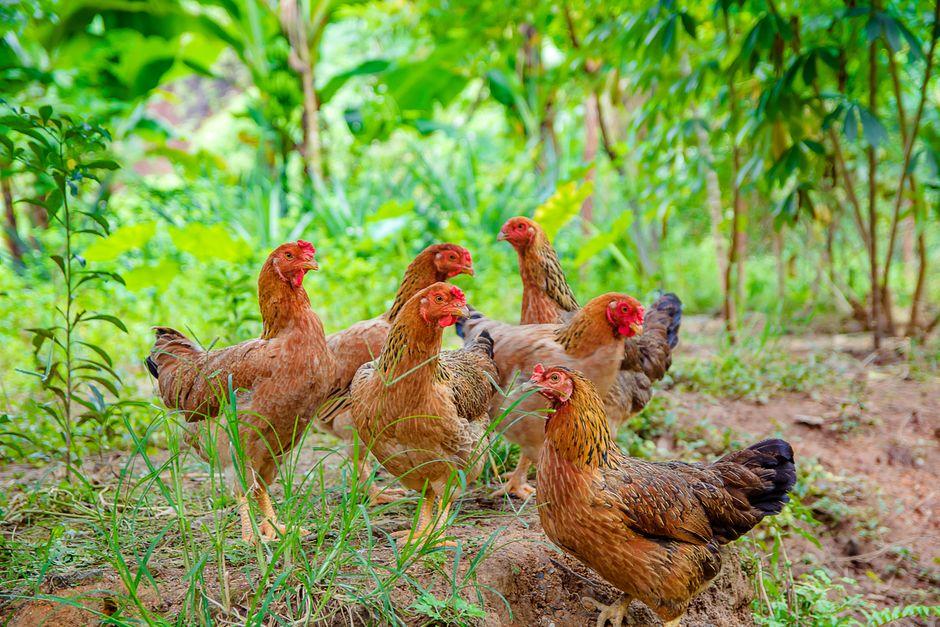
Free-ranging, even part-time, offsets feed costs. During active foraging months, a hen with good pasture access gets 10-30% of her nutritional needs from bugs, seeds, and greens. That’s substantial. A sturdy chicken tractor moved daily across your yard does the same thing if you don’t have space for full free-range.
Fermented feed’s worth trying. It takes time but fermentation increases nutrient bioavailability and most keepers report feeding about 20-25% less dry weight for the same production. You’ll need a few food-grade 5-gallon buckets and a week to learn the process.
Don’t keep unproductive birds out of pure sentiment forever. A hen in her third year producing 2 eggs per week costs about the same in feed as a second-year hen producing 5. That math compounds. What you do with older hens is your choice, but it’s a real cost decision.
The honest version is this: backyard chickens are a hobby that produces food, not a food production system that happens to be enjoyable. Once you accept that framing, the math stops being depressing and starts being irrelevant. You’re paying extra for better eggs, a closer connection to your food, and, if you’re like me, the small daily pleasure of watching six hens argue over a tomato hornworm. Some things don’t need to pencil out.
Photo: ZhiCheng Zhang via Pexels
Sources
- Little Giant Hanging Feeder
- galvanized metal trash can
- sturdy chicken tractor
- ZhiCheng Zhang
- Renogy 200W Solar Starter Kit + 30A Charge Controller
Disclosure: As an Amazon Associate, we earn a small commission from qualifying purchases at no extra cost to you. We only recommend products that genuinely support the topics covered in this article.
- Renogy 200W Solar Starter Kit + 30A Charge Controller (~$169), Complete beginner solar kit, 200W monocrystalline panel, charge controller, and mounting hardware included.
- Renogy 2×100W Monocrystalline Solar Panels (~$99), Expandable 200W panel set from the most trusted DIY solar brand, used widely in off-grid and home backup systems.