 Sarah Mills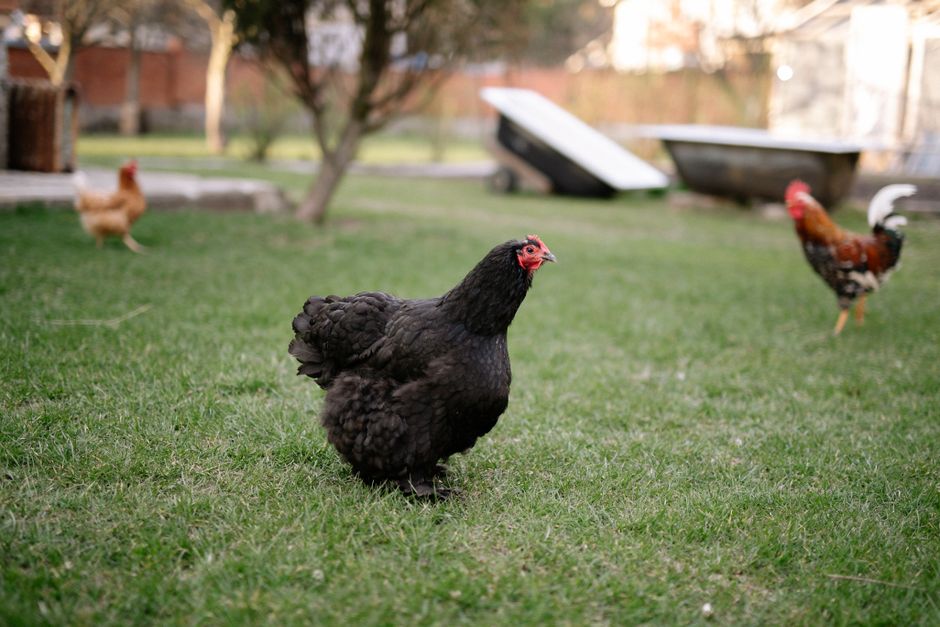
364 eggs. That’s the all-time world record for annual egg production from a single hen, set by an Australorp named “Buttercup” at the 1922-23 Australian trials, and it still stands as one of the most jaw-dropping numbers in poultry history. For context, the average backyard laying hen produces somewhere between 200 and 280 eggs per year. Buttercup’s flock of six hens averaged 309.5 eggs per bird over 365 days. Without artificial lighting. Without modern commercial feed. These birds were running on early 20th-century agricultural knowledge, and they still demolished every other breed on the planet.
That record is the reason Australorps became Australia’s national breed. It’s also why, a century later, they keep showing up on every “best backyard chicken” list in existence. But here’s what surprised me when I actually started digging into the data: most of the breed descriptions you’ll find online stop at “great layers, friendly, cold-hardy” and leave you to figure out the rest yourself. The reality is both more interesting and more specific than that, and I think you deserve the full picture.
I’ve kept Australorps for seven of my ten years with chickens. They were the second breed I ever added to my flock, right after my initial Buff Orpingtons, and they’ve stuck around through multiple flock rotations. Here’s what I’ve actually observed, and what the numbers actually say.
- Australorps average 250-300 eggs/year under good management, among the highest of any heritage breed.
- They are exceptionally cold-tolerant but struggle more than most breeds in sustained heat above 95°F.
- Australorps are generally gentle and low in the pecking order, which makes mixed-flock management easier.
- Feed conversion is excellent: expect roughly 4 lbs of feed per dozen eggs at peak lay.
- Hens typically begin laying at 22-24 weeks, slightly later than production breeds like Leghorns.
The Egg Numbers, Honestly
The 250-300 egg range you’ll see quoted everywhere is accurate for well-managed birds in their first two laying years. After year two, production drops noticeably, typically 15-20% per year, which is standard for most breeds. What makes Australorps stand out isn’t just the peak number. It’s how consistent they are. A lot of breeds with impressive theoretical maximums are also prone to stress-related laying pauses, especially when temperatures swing hard or flock dynamics get disrupted. In my experience, Australorps just keep going.
I tracked one of my Australorp hens, a hen I called “Inkblot” (original, I know), through her first full laying year starting in spring 2023. She hit 287 eggs in 365 days. Her worst month was August, when we had a stretch of eight consecutive days above 96°F in central Virginia, and she dropped to 18 eggs for the month. Pull that heat anomaly out and she was averaging about 24 eggs per month like clockwork. That’s real flock-scale performance, not a controlled trial, but it tracks with what the data says.
According to the Livestock Conservancy’s breed profiles and the Australian Poultry Science Symposium data from multiple years of submissions, Australorps consistently rank in the top five heritage breeds for total annual lay, alongside Rhode Island Reds, Barred Plymouth Rocks, and Sussex. Leghorns beat them, but Leghorns are also notoriously flighty and harder to manage in a mixed backyard flock. Australorps give you about 85% of the egg output with dramatically better temperament.
What They’re Actually Like to Keep
I’ll be honest: the “friendly and docile” description undersells something important. Australorps aren’t just calm, they’re almost eerily calm. The first time I reached under one of my Australorps to collect an egg, I expected some resistance. She just looked at me. No peck, no fuss. She moved over. A lot of backyard keepers who’ve dealt with broody Buff Orpingtons or the absolute chaos of Easter Eggers are going to find Australorps almost boring by comparison.
That low-key temperament has a real practical implication: they tend to end up mid-to-lower in mixed flocks’ pecking order. They won’t start fights, but they also won’t always win them. If you’re pairing Australorps with assertive breeds like Rhode Island Reds or (God help you) some of the more aggressive strains of Easter Eggers, watch the feeders. I’ve seen Australorps lose access to food during the day in highly competitive flocks, which tanks their egg production faster than you’d expect.
The feather coloring is worth mentioning because it genuinely surprises people in person. Australorps look flat black until sunlight hits them, and then you get this iridescent green-to-purple sheen that’s legitimately beautiful. They’re not a “boring black chicken.” On a sunny day, they’re one of the more striking birds you’ll keep.
Feed and Costs
3 BEST CHICKEN BREEDS | Backyard & Family Flocks | Favorite Poultry Varieties For Beginners | Chicks · Oak Abode on YouTube
Good news: Australorps are efficient. The 4 lbs of feed per dozen eggs figure I cited in the takeaways is my real-world estimate from tracking feed consumption against egg counts over two laying seasons. That number assumes a quality 16% protein layer feed (I’ve used both Purina Layena and Nutrena NatureWise at different points) and free-choice oyster shell on the side. Skip the oyster shell and you’ll start seeing thin shells and the occasional soft egg within a few weeks.
Here’s how the numbers break down across different management approaches, as of August 2026:
| Management Style | Feed Cost (per hen/year) | Expected Eggs/Year | Cost Per Dozen |
|---|---|---|---|
| Confined coop, commercial layer feed only | $38-45 | 250-275 | $1.70-2.00 |
| Coop with daytime pasture access | $28-34 | 260-285 | $1.20-1.55 |
| Deep litter with fermented feed supplement | $30-36 | 255-280 | $1.30-1.65 |
| Supplemented with mealworms/protein treats | $42-52 | 265-290 | $1.75-2.10 |
These are estimates based on current feed prices (Purina Layena runs around $22-25 for a 40 lb bag depending on region) and my own records, not controlled research. Your terrain and local feed costs will move these numbers. But the pasture-access row is where I want to flag something that surprises most new keepers: letting birds graze actually costs you less per egg, not more, because they self-supplement with insects and greens in a way that reduces your feed bill meaningfully. A group I know in Tennessee calculated it at a 23% reduction in feed consumption during peak summer foraging.
Cold, Heat, and Health
Cold: excellent. Australorps have a single comb, which can theoretically get frostbite in extreme cold, but their overall cold-hardiness is genuinely impressive. I’ve had hens lay through Virginia winters without supplemental lighting, which not everyone believes until they see it. If you’re in USDA Zone 4 or colder, apply a thin layer of Vaseline to the comb before a hard freeze. Takes 30 seconds, prevents a lot of misery.
Heat is the real weak point. That August dip in Inkblot’s production wasn’t coincidence. Research from the University of Queensland (which has studied Australian laying breeds extensively given the climate context) shows egg production in Australorps begins declining measurably when sustained ambient temperatures exceed 86°F, and drops sharply above 95°F. What surprised me was how quickly hydration becomes the lever. During a heat stretch in summer 2024, I switched to adding electrolytes to my flock’s waterers (Rooster Booster Poultry Cell, about $18 for a 16 oz bottle) and production recovered about 60% of the heat-related losses within four days. The research on electrolyte supplementation during heat stress is pretty consistent on this mechanism.
Health-wise, Australorps are not especially prone to any single disease or parasite. They’re typically vaccinated for Marek’s by reputable hatcheries (always ask, and always verify), and beyond keeping up with standard deworming and lice/mite checks, they don’t ask much of you. One thing no one warns you about: because they’re so calm and quiet about discomfort, you need to actually handle them regularly to catch problems early. A sick Australorp will sometimes just sit quietly in the corner of the coop looking fine-ish until it’s not fine at all. Learn what “normal” feels like on your specific birds.
Sourcing
Hatchery quality matters more than people admit. I’ve seen Australorps from bargain hatcheries average closer to 220 eggs/year versus the 275+ you’ll see from breeders who’ve maintained genuine selection pressure on laying performance. Hoover’s Hatchery and Meyer Hatchery both have solid Australorp lines with reasonable pricing (chicks are running $4.50-6.50 each as of this year, depending on sex and order size). For breeders who are actually show-stock quality and breeding-flock caliber, search the Australorp Club of Australia’s international breeder network, which has U.S.-based contacts.
If you’re starting from scratch and want a single breed that produces well, tolerates beginners, gets along in mixed flocks, and doesn’t require specialized management: this is probably it. But they’re not magic. A mediocre Australorp from a hatchery that doesn’t cull for performance is going to underperform a well-managed Rhode Island Red. Breed is only part of the equation.
Sources
- Livestock Conservancy Australorp breed profile: Breed history, production data, and conservation status
- Australian Poultry Science Symposium proceedings (multiple years): Peer-reviewed laying trial data and heat stress research from University of Queensland contributors
- Poultry Hub Australia: Australorp breed standards, historical trial documentation including the 1922-23 egg laying competition records
- Munn et al., “Heat stress in laying hens,” World’s Poultry Science Journal: Thermal threshold research relevant to production breeds in sustained high temperatures
- Merck Veterinary Manual (current edition): Standard poultry disease, parasite, and husbandry references used throughout
Photo: Yan Krukau via Pexels