 Carol Thompson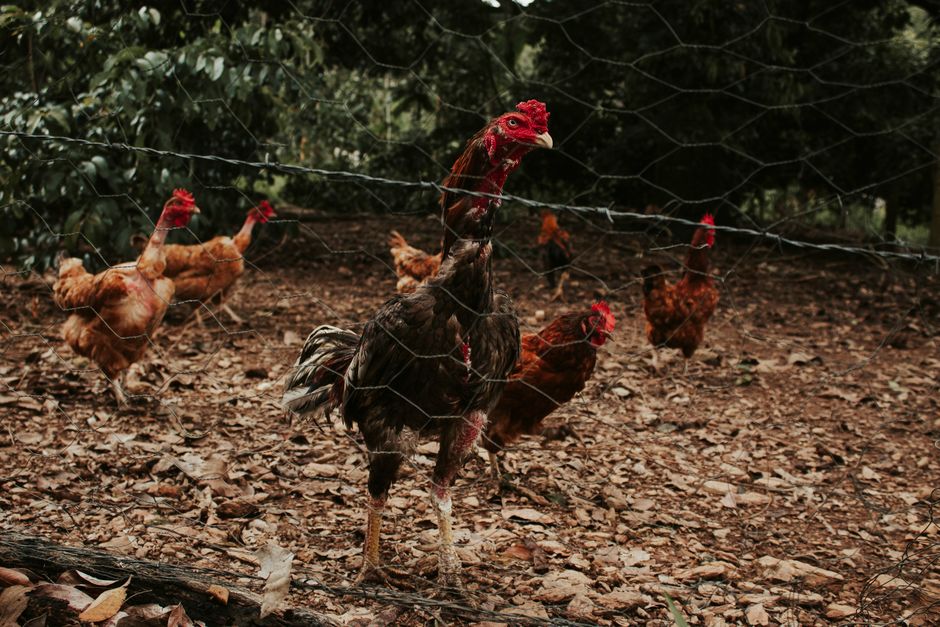
Someone in a Facebook group I follow posted a photo last week of her arm with three long scratches on it, and the caption just said “Day 47 of owning a rooster.” Forty-seven comments, all some version of “same.”
Aggressive chickens are one of those things nobody mentions when they’re selling you on backyard flocks. The hatchery websites show fluffy birds pecking gently at flowers. What they don’t show you is a rooster who has decided your ankles are the enemy, or a hen who has been drawing blood on the bird below her in the pecking order for six days running. If you’re here because something in your flock has gone sideways, that makes complete sense. Let’s figure out what’s actually going on.
Before intervening, walk through this checklist to identify the most likely cause-each trigger has a specific threshold that indicates action is needed.
| Trigger | Warning Signs | Action Threshold | First Fix to Try |
|---|---|---|---|
| Overcrowding | Feather picking concentrated near roost areas; birds sleeping on floor to avoid others; multiple birds with bare backs or necks | <4 sq ft/bird indoors OR <10 sq ft/bird in run | Add second feeder/waterer spaced 6+ feet apart before expanding space |
| Rooster adolescence | Flogging at ankles; wing-dropping display toward humans; chest-bumping other birds | Bird is 4-8 months old AND behavior started within past 3 weeks | Wait and reassess at 10 months; avoid direct eye contact or chasing in meantime |
| Boredom | Aggressive pecking peaks mid-afternoon; run floor is bare dirt; birds mob you at feeding time | No scratch material, perches, or foraging items in run | Scatter whole-grain scratch in 4" of leaves or straw daily |
| Broody hen defense | Puffed posture; growling; aggression only when nest box is approached | Hen has been sitting 3+ days and attacks hands near nest | Collect eggs with leather gloves; break broodiness only if she's losing condition |
| Pain or illness | Sudden aggression from previously calm bird; hunched posture; reduced eating | Behavior change within 48 hours with no environmental cause | Isolate and inspect for bumblefoot, mites, or injuries before treating as behavioral |
| Resource competition | Attacks happen at feeder or waterer; one bird guards access point | Only 1 feeder/waterer for 6+ birds | Add second station at opposite end of run |
General information for comparison, confirm specifics for your situation.
Why Chickens Get Aggressive (and It’s Usually Not Random)
Aggression in chickens almost always has a cause. It’s not a personality defect, it’s not spite, and it’s not usually a permanent unfixable state. The bird is responding to something. Your job is to figure out what.
The most common causes I see break down roughly like this:
Overcrowding. This is responsible for more flock drama than anything else I can name. The standard recommendation is 4 square feet per bird inside the coop and 10 square feet in the run. That’s not a target. That’s a minimum. I’ve kept eight hens in a 6x8 coop with a 200-square-foot run, and even that felt tight in February when no one wanted to go outside. When birds can’t get away from each other, they’re constantly re-establishing the pecking order. It gets ugly fast.
Hormones. Roosters between 4 and 8 months old are teenagers with spurs. They test you. They test the hens. They test the dog, the garden hose, whatever. A lot of rooster aggression that people label as a character flaw is just adolescent behavior that either settles down or doesn’t. The ones that haven’t calmed by 9 or 10 months are telling you something real.
Boredom and low stimulation. A flock stuck in a bare run with nothing to do will invent drama. Chickens are smarter than most people think, and they need things to peck at, scratch through, and investigate.
Introducing new birds. Even one new hen can temporarily destabilize a previously calm flock. The hierarchy has to reset, and that involves some chasing and feather-pulling that’s genuinely alarming to watch but usually not dangerous if you’ve set things up right.
Pain or illness. A normally docile bird that suddenly becomes snappy is sometimes a bird that’s hurting somewhere. I learned this the hard way when one of my Australorps turned aggressive for two weeks before I figured out she was egg-bound.
Rooster Aggression Specifically: What Works and What Doesn’t
Rooster aggression toward humans is its own category, and a lot of the advice floating around online is, to put it plainly, not great.
You’ll read “never show fear” and “stare him down” and “carry him around to establish dominance.” Some of that’s not entirely wrong, but it oversimplifies how roosters actually work. What a rooster’s reading from you isn’t confidence or weakness in the abstract. He’s reading whether you behave like a flock member who respects the hierarchy, or a predator, or a competing rooster.
Here’s what actually changes behavior:
Stop running or flinching. I know it’s instinctive. But when you step back fast and yelp, you’ve confirmed his read that you’re prey or a threat. Slow, steady movement does more than all the staring-down in the world.
Don’t let him do it once and get away with it. The first time a rooster spurs or rushes you and you just walk away, you’ve taught him it works. You need to respond immediately, calmly, and consistently. Pick him up and carry him (not as punishment, but to interrupt the behavior and assert yourself without matching his aggression). Some people press him gently but firmly to the ground for thirty seconds. Both work. The key is consistency every single time, not occasional corrections.
Feed him from your hand. This sounds counterintuitive when you’re dealing with a bird who’s been coming at you. But a rooster who associates your presence with food stops seeing you as a competitor. I had a Buff Orpington rooster named Frank who was genuinely dangerous at seven months. By nine months, after daily hand-feeding and calm handling, he was following me around the yard like a puppy. He still had his strut, but he stopped trying to remove my ankles.
Here’s the part nobody says: some roosters don’t change. I’ve had two in ten years that I worked with for months and never made real progress. One was a Rhode Island Red who’d been allowed to attack people from pullet age and had completely hardwired that behavior. The other was a Leghorn mix who was just constitutionally defensive. Both were rehomed to farms where they lived perfectly fine lives without human interaction. That’s not failure. That’s good judgment.
If you have kids under eight or nine and an actively aggressive rooster, don’t try to train your way through it while the kids are around. That’s a facial injury waiting to happen. Either solve it fast or make a different decision about that bird.
Hen-on-Hen Aggression: The Pecking Order Isn’t Always Peaceful
10 Chicken Coop Mistakes you DON'T want to Make ! · Carolina Coops® on YouTube
People romanticize the pecking order. “Oh, they’re just establishing hierarchy.” Yes. And sometimes that process involves one hen being pecked to bloody baldness over several days while you wonder if this is normal.
It’s not always normal. There’s a difference between a hen asserting dominance (a peck, a chest bump, the higher-status bird standing tall while the lower bird crouches) and a hen who’s decided to systematically wound another bird every time they come within range. The second one needs intervention.
Watch for feather loss along the back of the neck and the base of the tail. Those are the spots that get targeted first, and once there’s blood visible, the whole flock will pile on. Chickens are attracted to red in a way that will shock you the first time you see it. One small wound can escalate to a dead bird within hours if you’re not watching.
If you have a bird who’s being targeted:
Move her out temporarily. I use a wire dog crate inside the run so she’s still visible to the flock but can’t be reached. Feed her separately so she’s not starving while the others keep her from the feeder. Give her two weeks before reintroduction, and do it under supervision in the late afternoon when everyone’s a bit tired and less reactive.
If you have a hen who is the aggressor:
Isolate her instead. Removing the high-status bird from the flock, even for just a week, resets her social position significantly. When she comes back, she has to re-establish herself, and that process tends to go more calmly than the original bullying. I’ve seen this work more reliably than trying to manage a bully while she’s still in with the flock.
Anti-pick products: Rooster Booster Pick-No-More is worth keeping in your kit (around $8-12 at most feed stores). It’s a dark-colored, bitter paste you apply to wounds and targeted areas. The color disguises the red of irritated skin, and the taste discourages pecking. It’s not a permanent solution, but it buys you time while you address the root cause.
For birds who’ve lost significant feathering from being pecked, a hen saddle (also called a hen apron) protects the back and base of tail during reintegration. I like the canvas ones from Hen Holster, which run about $8-12 each and last for years.
The Things That Actually Reduce Aggression Long-Term
Sources
- Justiniano Adriano
- same. Aggressive
More space is the single highest-impact change you can make. If you can expand the run, do it before anything else.
Beyond space, boredom-busting matters more than most people realize. A flock with a varied environment is a calmer flock. I hang a head of cabbage from the run wire every few days. I scatter scratch grains in a deep layer of leaves or wood chips so they spend an hour doing what they were born to do. Flock blocks, like the ones from Purina (the 25 lb. version is usually around $15), keep birds occupied and also reduce feather-pecking. These aren’t fancy. They just work.
Protein levels matter too. Feather-pecking especially can intensify when birds are deficient. Standard layer feed is usually fine, but if you’re in a heavy molt or your birds have been through stress, bumping up protein temporarily with a flock raiser feed (18-20% protein) or supplementing with scrambled eggs or dried mealworms can noticeably calm things down within a week or two.
One thing I want to say clearly: if your flock has been aggressive for a long time and you’ve been managing it rather than solving it, ask yourself honestly whether the root conditions have been addressed. Treating symptoms is exhausting and doesn’t end. Space, protein, enrichment, and appropriate flock composition are where this actually gets solved.
None of this is easy when you’re in the middle of it. A rooster who spurred you this morning doesn’t feel like a training project. He feels like a problem. But most of these situations are genuinely workable if you understand what’s driving them. The flock that’s calm enough to enjoy is worth the effort of figuring that out.
Photo: Justiniano Adriano via Pexels